
Repair or replace an appliance in your rental?
Repair or replace an appliance in a rental: safety first, then age, cost, repair history and the tenant's wait, with a worked example.
 By the RentalThread teamHow we write our guides7 min read
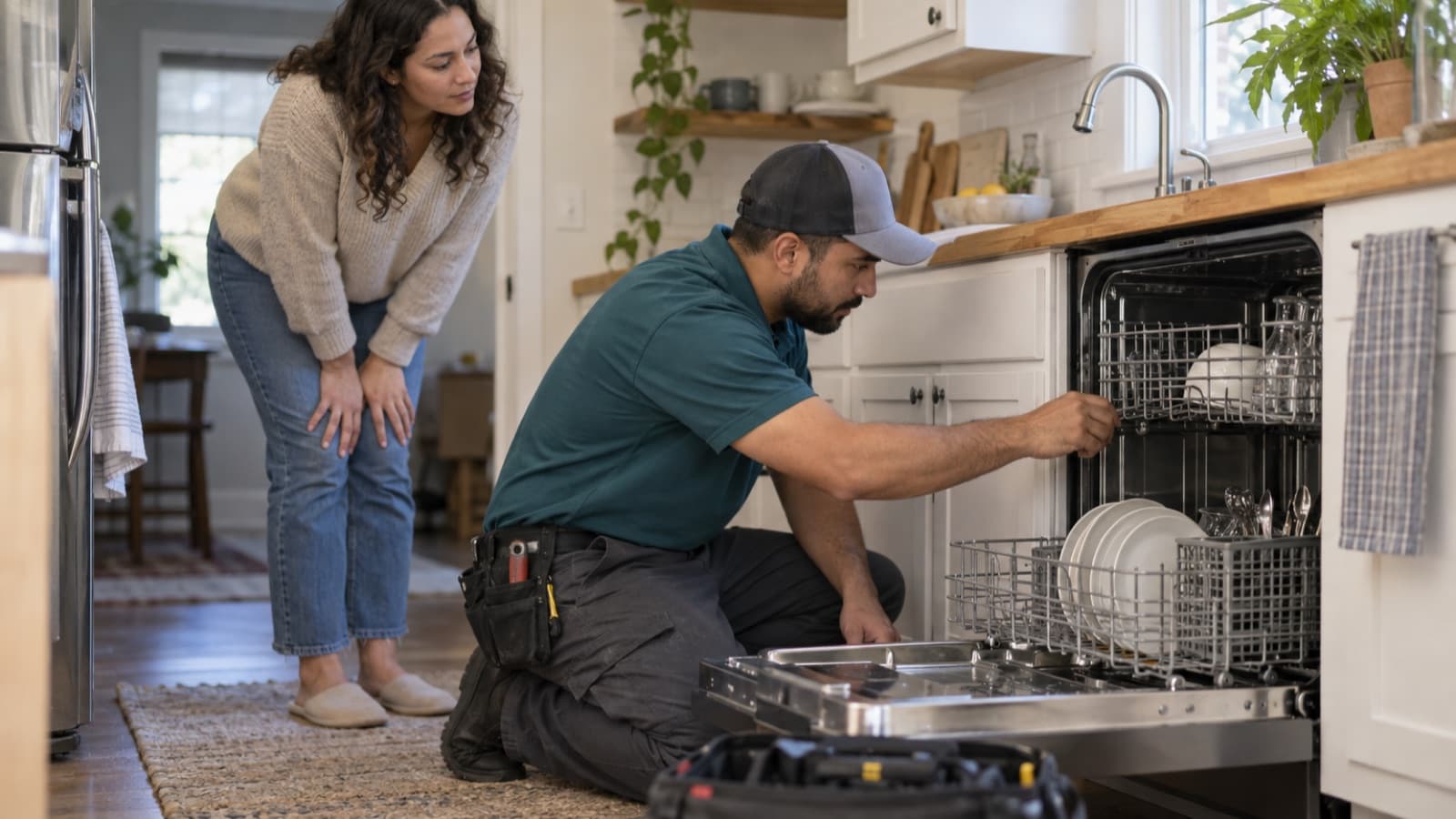
The fridge in your rental stops cooling, the pro is on site, and the tenant wants to know when they'll have one that works. Whether to repair or replace an appliance is a decision you often make in a few minutes, by phone, without the numbers in front of you. A guess can mean paying for a repair that fails again in six months, or buying a new unit when a cheap part would have done.
This guide is for owners.
Why repair or replace an appliance is a hard call in a rental
At home, a broken washer is an inconvenience you can live with for a week while you compare prices. In a rental, someone else is living with it, and they're waiting on you. That pressure pushes owners toward whatever answer is fastest.
The information you need is often scattered, too:
- Nobody knows how old the appliance is. It came with the property, or a previous tenant's move-in report is the only clue.
- The last repair is buried in a text thread or an old email, so you can't tell whether this is the first failure or the third.
- The estimate arrives by phone, without the model number, the diagnosis or how long the part will take.
- A replacement feels expensive because it lands in one month, while a repair bill feels small even when it's the second one this year.
Safety comes before cost
Some faults aren't a cost decision at all. If the tenant or the pro reports any of these, treat it as urgent and make the appliance safe first:
- A gas smell near a stove, dryer or water heater. Everyone should leave, call the gas company's emergency line or 911 from outside, and not switch anything on or off.
- Scorch marks, sparks, a burning smell or a tripping breaker that keeps tripping on the same appliance.
- Water leaking near outlets or wiring.
- A carbon monoxide alarm or symptoms such as headaches that ease outdoors. Everyone should leave at once, call 911 from outside and stay out until responders say it's safe.
Gas and electrical work should be done by a qualified pro, and you shouldn't ask a tenant to attempt it. If a pro says a unit is unsafe to keep running, ask for that in writing and have the pro shut off its gas or power until it's fixed or replaced. Nobody should use it in the meantime. Our guide to emergency repairs in a rental covers what to do in the first hours.
Five questions that decide most cases
Once the appliance is safe, these questions settle most repair-or-replace calls. Ask the pro for the answers before you approve anything.
1. How old is it, and how long do units like it last?
Lifespans vary with the brand, how hard the unit is used and, for water heaters and dishwashers, the water quality. Ask the pro what they usually see for this type of appliance. If you don't know its age, the serial number on the label often encodes the manufacture date, and the manufacturer's site or support line can decode it.
A unit near the end of its expected life tends to need the next repair soon, so a repair buys less time.
2. What does the repair cost compared with a new one?
A common rule of thumb is the "50% rule": if the repair costs more than half the price of a comparable new appliance, replace it. It's a rough guide, not a standard: no single cutoff fits every case, so weigh it with the unit's age, its warranty and the tenant's wait. It works best when you compare complete numbers:
- Repair: diagnosis fee, parts, labor and any return visit.
- Replacement: the unit, delivery, installation, removal of the old one and any new hookups or permits.
3. Has it broken before?
A second repair on the same appliance in a short time is a warning sign that the fault may keep coming back. What you've already spent is gone either way, so don't count it. Compare what this repair buys you from today, in cost and remaining life, with the cost of a new unit.
4. Is the fault in a core part?
A worn door seal, a belt, a fan or an igniter is a routine part. A failed compressor in a fridge, a leaking tank on a water heater or a burned control board on an older washer costs more to fix, and the rest of the unit is just as old. Ask the pro which kind of fault it is.
5. What does each option mean for the tenant?
Compare the wait, not only the price. A repair that needs a part shipped in two weeks may leave the tenant without a fridge longer than a replacement delivered in three days. If the wait is long, agree on a temporary fix, such as a loaner unit or a rent credit, in writing.
Two smaller points can tip a close case. Older units can use more energy, which matters most when the tenant pays the utility bill and may notice. And a new unit usually comes with a manufacturer's warranty, while a repair may carry only a short warranty on the part.
A worked example
Here are two cases at the same property, Apt 4B on Maple Street. All amounts are examples.
| Appliance | Age | Fault | Repair estimate | Comparable new, installed | Repair as share of new | Past repairs | Decision |
|---|---|---|---|---|---|---|---|
| Fridge | 12 years | Compressor | $650 | $1,100 | 59% | One, last year | Replace |
| Washer | 4 years | Drain pump | $180 | $900 | 20% | None | Repair |
For the fridge, the age, the cost share, the core fault and last year's repair all point to replacing it. The washer looks worth repairing, as long as the part arrives soon. Most cases are less clear than these, and that's when the tenant's wait and the repair warranty decide.
Check who provides and repairs the appliances
Who has to supply, repair or replace appliances depends on the lease and on local rules. In many places, an owner who supplies an appliance must keep it working, and a tenant pays for damage they caused. Some leases list appliances "as is" or leave small repairs to the tenant, and some local laws limit what a lease can shift. Rules differ by country, state and city, so check the rules where the property is before you decide who pays or how fast it must be fixed.
When you replace an appliance the lease includes, a comparable model is the safe choice. If you plan to change it, for example a gas stove for an electric one, agree with the tenant in writing first.
What to ask the pro before you approve
Get these in writing, ideally in the same message thread as the request:
- A photo of the label with the brand, model and serial number.
- The diagnosis: what failed and why, in plain words.
- A written estimate with the diagnosis fee, parts and labor shown separately.
- Whether the part is in stock and, if not, how long it takes to arrive.
- The warranty on the repair, on parts and labor.
- Whether the appliance is still under the manufacturer's warranty or has an open safety recall. The model and serial number let you check both on the manufacturer's site.
- Their honest view: would they repair it if it were theirs?
If the tenant reported a water heater problem, the checks in our guide to no hot water in an apartment give the pro a head start before the visit.
After the decision, write it down
Record the outcome while the details are fresh: date, appliance, model, cost, who did the work and the warranty end date. If you replaced the unit, keep the receipt and the manual, and update the item's replacement value in your furnished rental inventory if you keep one.
Then use the record to plan. Add the new unit's expected replacement to your maintenance budget, and put its routine care on the calendar: cleaning fridge coils, flushing the water heater, clearing the dryer vent. Our preventive maintenance checklist lists these by season.
How RentalThread will make it easier
With RentalThread, each repair will have its own thread with the tenant's photos, the pro's estimate and your approval, so the history of every appliance stays with the property. You'll be able to keep an inventory of the home built from photos, with replacement values that you review and correct, so they're at hand when the next estimate arrives. Recurring maintenance will come with reminders, and rent and expenses will be tracked per property and month.
See what's planned for owners.
Send it to an owner, manager, agent, tenant or pro who could use it.
Questions, or a topic you'd like us to cover? Write to us at contact@rentalthread.com.