
Landlord smoke detector requirements: who tests what
Landlord smoke detector requirements in practice: where smoke and CO alarms go, how often to test them, and what the owner and the tenant each do.
 By the RentalThread teamHow we write our guides5 min read
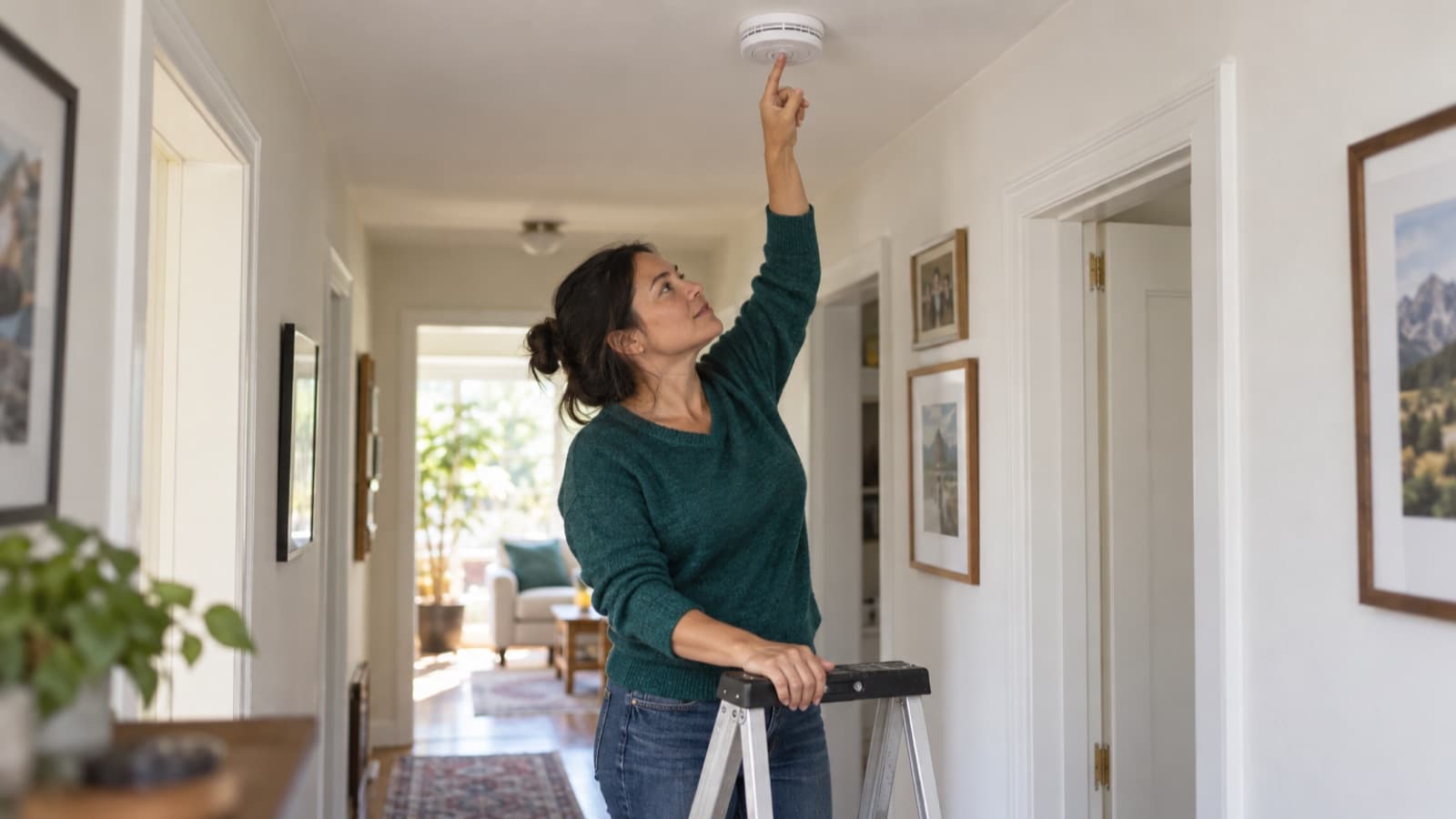
Landlord smoke detector requirements are only the start: once the alarms are up, someone has to keep them working. Smoke and carbon monoxide detectors fail quietly. A battery dies, someone pulls one off the ceiling because it went off while they cooked, or a unit reaches the end of its life. From the floor, a dead alarm looks like a working one.
This guide is for owners who rent out a home. It covers where the alarms go, how often to test and replace them, and who usually does each part, so the job doesn't fall between the owner and the tenant. The rules differ by country, state and city, so treat this as a starting point and check the rules where the property is.
Why working alarms matter
A smoke alarm buys the people inside time to get out. A carbon monoxide alarm warns about a gas you can't see or smell, which can come from a gas water heater, a stove, a furnace, a fireplace or a car in an attached garage.
For an owner, there's also responsibility. Many places require working smoke alarms in rentals, and some require CO alarms where there are gas appliances or an attached garage. If an alarm was missing or dead when something happened, the question of who should have checked it will come up.
Why they get forgotten
Nobody owns the job. The owner installed the alarms years ago and assumes the tenant tests them. The tenant assumes the owner checks them between tenants. The last pro who came fixed the sink and never looked up.
Then there's nuisance. An alarm that chirps at 3 AM for a low battery, or goes off every time someone makes toast, tends to get its battery removed. It stays on the ceiling, so everyone thinks it works.
Landlord smoke detector requirements: where the alarms go
Fire safety organizations such as the US National Fire Protection Association (NFPA) give the common baseline; local codes can ask for more:
- Smoke alarms: inside each bedroom, outside each sleeping area (the hallway by the bedrooms) and on every level of the home, including the basement.
- CO alarms: outside each sleeping area and on every level, in any home with fuel-burning appliances, a fireplace or an attached garage.
- Away from false alarms: NFPA advises keeping smoke alarms at least 10 feet from cooking appliances, and away from the bathroom door, where shower steam sets them off. Follow the manual and the local code for the exact placement.
- Combination units detect both smoke and CO and count as both, if the local rules accept them.
Many US places also require newer or replacement alarms to be a specific type, such as sealed 10-year battery units or hard-wired units with battery backup. Check the local code before you buy.
Testing and replacing, step by step
Every month: press the test button on each alarm until it sounds. If one stays silent, follow the manual: replace a removable battery and test again. If it still fails, or the battery is sealed, replace the alarm right away.
Every year: check the date on the back of each alarm. Replace smoke alarms 10 years after the manufacture date (not the purchase date). Replace CO alarms when they signal end of life or when the manufacturer's date says so, often between 5 and 10 years. Replace removable batteries once a year, even if they still work.
At every move-in and move-out: test every alarm with the tenant present, note the dates, and take a photo of each one. Our move-in inspection checklist has room for it.
When an alarm sounds outside a test: if a smoke or CO alarm goes off, everyone gets outside and calls 911 or the local emergency number from there. Stay out until the responders say it's safe to go back in.
Hard-wired alarms need a qualified pro
Some alarms are wired into the home's electrical system and linked, so one going off sets off all of them. Replacing or moving one means electrical wiring work. Have a licensed electrician do it with the power safely off, and replace a linked unit with a compatible model so the interconnection keeps working. Testing and changing the backup battery are usually safe for anyone, following the manual.
Who does what
Laws decide this in many places, and the lease can add detail. A common split looks like this:
| Task | Usually done by |
|---|---|
| Install the alarms the code requires | Owner |
| Test them at move-in, with the tenant | Owner and tenant together |
| Press the test button every month | Tenant |
| Replace removable batteries during the lease | Tenant, or owner, depending on local rules |
| Report an alarm that fails or keeps chirping | Tenant, right away |
| Replace a failed or expired alarm | Owner |
| Install, move or replace hard-wired alarms | Licensed electrician, paid by the owner |
| Check dates and test between tenants | Owner |
Write the split into the lease or the welcome packet, along with a sentence the tenant can act on: "If an alarm fails the test or chirps, contact us right away and don't remove it." Our guide on what to give new tenants on move-in has a place for it. A tenant should never disable an alarm, and an owner should replace a reported one quickly, as a safety repair.
Put it on a calendar
Testing once a month only happens if someone remembers. Put the monthly test, the yearly date check and the battery change on a calendar for each property, with a reminder to the tenant for the monthly test.
Our free preventive maintenance calendar builds that list for you. It runs in your browser: tick that the property has smoke and CO alarms, along with its other equipment, and it adds the monthly test and the yearly check of alarm and extinguisher dates to a 12-month task list, with who usually does each task. For the rest of the year's tasks, see our preventive maintenance checklist.
Rules on alarm types, placement, testing and who pays vary by country, state and city, and they change. Check them with your local fire department or housing authority.
How RentalThread will make it easier
With RentalThread, recurring maintenance will run on a schedule for each property, with reminders for everyone involved, so the monthly test and the yearly check don't depend on memory. When an alarm fails, the tenant will report it with a photo or video, and the replacement will follow one shared thread from request to the pro's visit and payment, with a record of when it was fixed.
See what's planned for owners.
Send it to an owner, manager, agent, tenant or pro who could use it.
Questions, or a topic you'd like us to cover? Write to us at contact@rentalthread.com.