
Rental property preventive maintenance checklist
A preventive maintenance checklist for rental properties: what to check each month, each season and once a year, who does it, and how to keep the record.
 By the RentalThread teamHow we write our guides7 min read
A rental property preventive maintenance checklist turns repairs you can plan into appointments, so fewer of them arrive as emergencies. A water heater drained once a year, gutters cleared before the rains and an AC serviced before the hot months cost a scheduled visit. Skip them and you get a flooded closet on a Sunday, a tenant without hot water and a plumber charging for an urgent call.
This checklist is for owners and property managers. It works for one apartment or a few buildings, and it's grouped by how often each task comes up. Treat it as a starting list and adapt it to each property's equipment, its climate and what the building takes care of.
Why preventive maintenance slips
While the water heater works, nobody thinks about it. The tenant doesn't know when it was last serviced, the previous manager kept the date in their head, and the receipt is in an email from three years ago.
Reactive repairs also crowd out the planned ones. When a tenant reports a leak, you deal with it today. The gutter cleaning that would have prevented the next leak has no date, so it waits until something breaks.
So write the tasks down once, give each one a date and a person, and record when it was done.
Start with what each property has
You can't schedule maintenance for equipment you haven't listed. For each property, write down:
- Water heater: type (tank, tankless, gas or electric), age and where it is.
- Heating and cooling: furnace, heat pump, mini-splits or window units, and the filter size.
- Appliances you supply: stove, fridge, washer, dryer, dishwasher.
- Safety devices: smoke alarms and carbon monoxide alarms (and their install dates), fire extinguisher.
- Roof, gutters and drainage, if the property has its own.
- Who services what: the plumber, the AC company and the building's management, with a phone number for each.
Take a photo of each appliance's label with the model and serial number. It saves a trip when a pro asks for it, and the manual is usually one search away.
Agree on who does what
Some tasks need a pro, some need you, and some are easier for the tenant, who's there every day. Put the tenant's part in writing, ideally in the lease or a welcome note: testing smoke alarms, changing AC filters, keeping drains clear, reporting leaks or damp spots right away.
A tenant can do a check, but you're still the one who makes sure it happens. Ask them to tell you when it's done, and follow up when they don't. Anything that needs tools, a ladder or opening up equipment goes to you or a pro.
Leave spare filters of the right size in the unit, and tell the tenant how to report a problem and with what details. Our guide on handling tenant maintenance requests covers that part.
Who pays for what depends on the lease and on the rules where your property is. Check both before you assign a task.
The preventive maintenance checklist
Every month (agree who does each check)
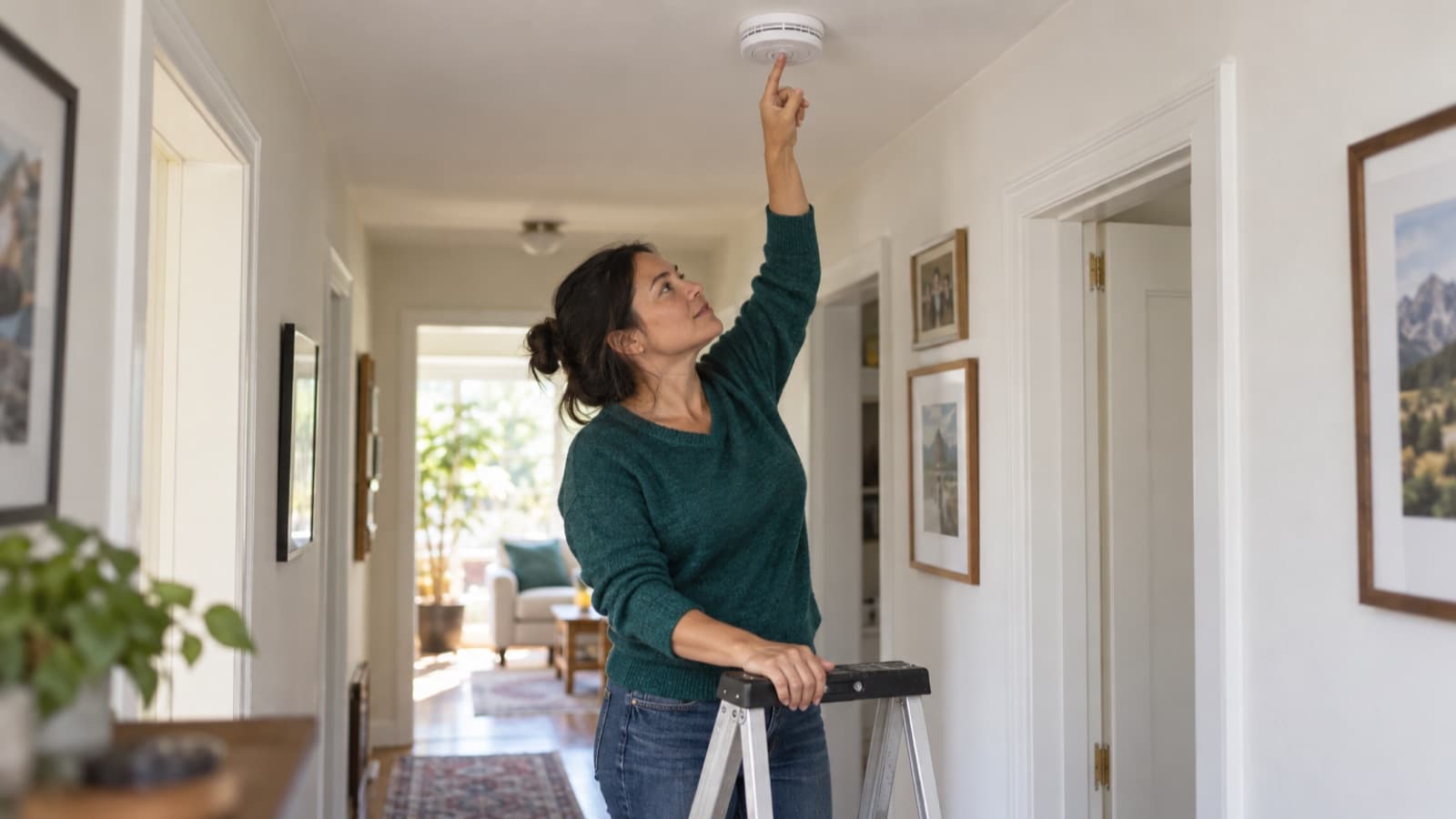
- Test smoke and carbon monoxide alarms with the test button. The US National Fire Protection Association recommends testing smoke alarms monthly. Our guide on smoke and CO detectors in a rental covers where they go, when to replace them and who does what.
- Test GFCI outlets in kitchens, bathrooms and outdoors with their TEST and RESET buttons, following the device's instructions. Leviton, a GFCI maker, recommends testing them monthly.
- Check that fire extinguishers are where they should be, undamaged and charged, with the gauge in the operating range if they have one. Kidde, an extinguisher maker, recommends a visual check every month.
- Look under sinks and around the toilet and water heater for drips or damp spots.
- Run water in drains that are rarely used, such as a guest bathroom shower, so the traps don't dry out and let in sewer smell.
Every one to three months
- Change or clean the heating and AC filters. The right interval is printed on the filter or in the system's manual; homes with pets usually need it sooner.
- Clean the range hood filter.
- Check that the dryer's lint screen is cleaned after every load, and that the vent hood outside isn't blocked.
Twice a year (you or a pro)
- Walk through the property with the tenant, at a time you agree in advance and with the notice your lease and local rules require. Look at ceilings and walls for stains, windows and doors for drafts, caulk around tubs and showers for gaps.
- Clean the gutters and downspouts, if the property has them, and check that water drains away from the foundation.
- Check the fridge's door seal and clean the coils behind or under it.
Before the hot season
- Have the AC or heat pump serviced: coils, refrigerant, drain line.
- Clear plants and debris from around outdoor units.
- Check window screens.
Before the cold season
- Have the furnace or heating serviced, including a check of any gas connections.
- Seal gaps around windows and doors, and protect outdoor pipes and faucets where it freezes.
Before the rainy or storm season
- Have a roofer check the roof and flashing for loose or missing pieces, or look from the ground.
- Clear outdoor drains and grates so storm water can run off.
For a full list by property, with what to tell tenants and what to check after each storm, see our storm season checklist for rental properties.
Once a year
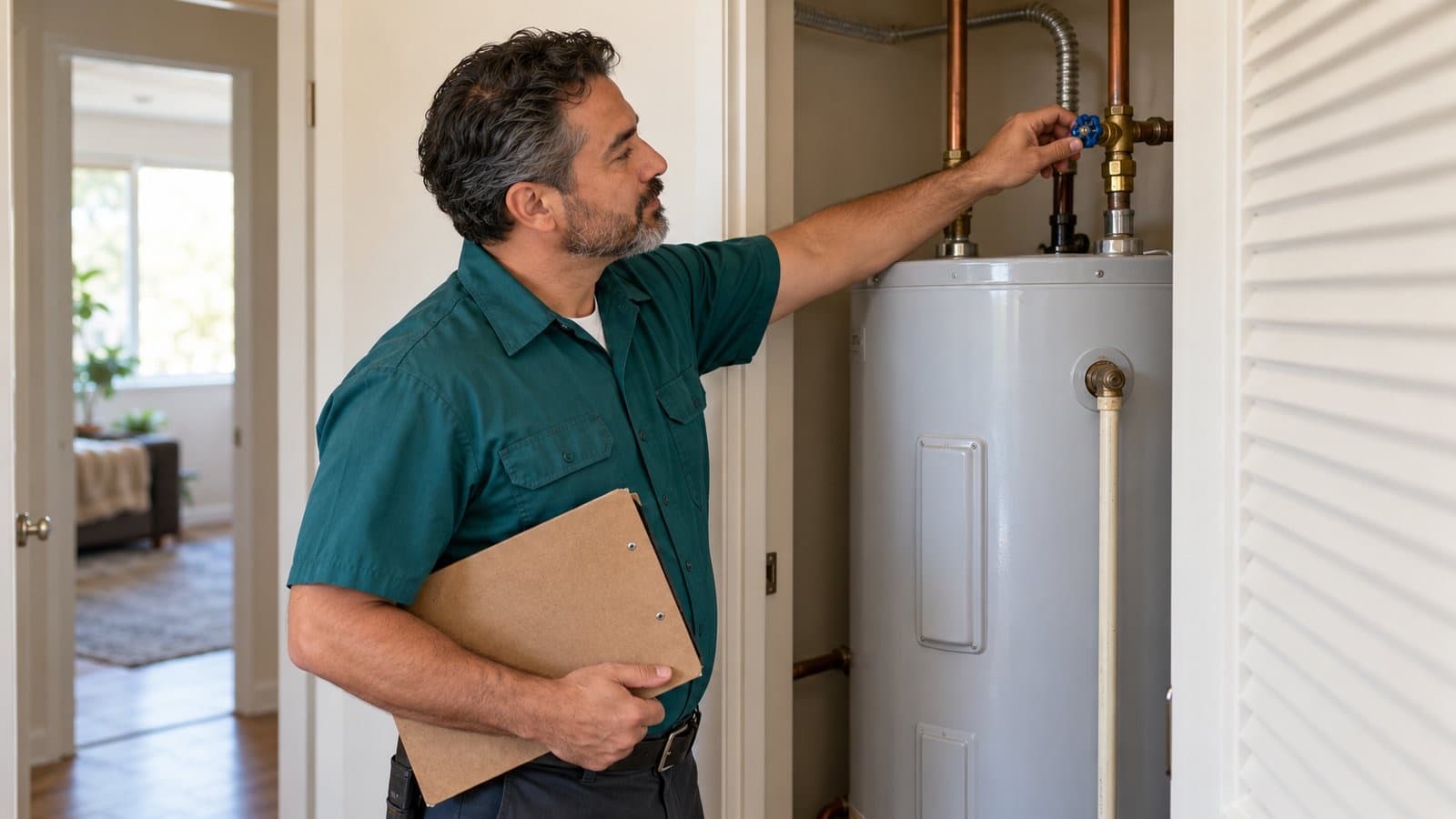
- Service a tank water heater on the schedule in its manual, which often includes draining sediment and testing the pressure relief valve. A plumber can do it if you'd rather not.
- Have the dryer exhaust duct inspected and cleaned, more often if the dryer gets heavy use. Don't wait for this visit if clothes are still damp after a normal cycle or take longer than usual to dry: the US Consumer Product Safety Commission lists both as possible signs of a blocked lint screen or exhaust duct.
- Follow each fire extinguisher's label for servicing and replacement, and replace alarms that have reached the end of their life (the date is on the back).
- Look for signs of pests in the basement, attic, garage and under the kitchen sink.
Between tenants
- Repaint scuffed walls and fix small holes.
- Deep clean appliances and check that every burner, light and outlet works.
- Replace worn caulk, washers and filters, and rekey the locks.
- Compare the unit with its move-in report. Our move-in inspection checklist shows how to record the condition room by room.
Adjust the list to the property. A condo whose building handles the roof and gutters drops those lines; a house with a well, a pool or a septic tank needs its own.
Put it on a calendar and keep the record
Add every recurring task to a shared calendar with a reminder ahead of it: a week is enough for simple tasks, and jobs where pros book up early, such as AC service before summer, need more. That leaves time to book the pro and agree the visit with the tenant. Group visits where you can: one walkthrough can cover the alarms, the caulk and the filters.
After each visit, write down the date, what was done, who did it, what it cost and any photos. Keep it with the property's repair history. When the AC fails in its tenth summer, you'll know whether it was serviced every year, and you'll have the numbers to decide between another repair and a replacement. Our guide on whether to repair or replace an appliance walks through that call. If you manage several properties, our guide on how to track maintenance for multiple rental properties shows how to keep them all in one log.
Costs belong in your books too. Our guide on tracking rental income and expenses shows a simple way to keep them per property. Our guide on how much to budget for rental property maintenance shows how to set money aside for these jobs before they come due.
How RentalThread will make it easier
RentalThread will let you set up recurring maintenance on a schedule for each property, with reminders before each task is due. When a pro comes, the visit becomes a job in its own thread: the estimate with photos, your approval, the visit time, the finished work and the payment, all followed by everyone involved. Tenants will see who's coming and when.
Each property keeps its full history in one place, so the date of the last water heater service and its invoice are a tap away. AI will summarize what happened at each property, and you'll review the summary before you share it.
See what's planned for owners and property managers.
Send it to an owner, manager, agent, tenant or pro who could use it.
Questions, or a topic you'd like us to cover? Write to us at contact@rentalthread.com.