
How to get paid faster as a contractor on rental repairs
How to get paid faster as a contractor on rental repairs: clear job details, written approvals, an invoice that matches and a follow-up routine.
 By the RentalThread teamHow we write our guides5 min read

To get paid faster as a contractor on rental repairs, fix the steps before the invoice. Late payments on rental jobs can start much earlier in the job: a job nobody described clearly, an approval given over the phone, or an invoice sent to someone who can't approve it.
This guide is for plumbers, electricians, HVAC techs and other maintenance pros who work on rentals for owners and property managers. It covers what to ask before the visit, how to write an estimate that gets a quick yes, how to handle extra work, how to close a job and how to follow up on an unpaid invoice.
Why rental jobs are slow to pay
On a rental job you rarely deal with one person. The tenant lets you in and describes the problem. The owner or the property manager approves the price. Sometimes the manager approves and the owner pays, weeks later, after checking an invoice for work they never saw.
Each handoff is a place where the job can stall:
- The request arrives as "the sink is leaking", with no photo, no unit number and no access details, so the first visit is a look instead of a fix.
- The estimate goes out by text, and the "sounds good" comes from someone who can't approve that amount.
- Extra work found on site gets a verbal OK that nobody remembers when the invoice arrives.
- The invoice reaches the owner without photos or a link to what was approved, so it goes into a pile to check later.
Get the job details before you go
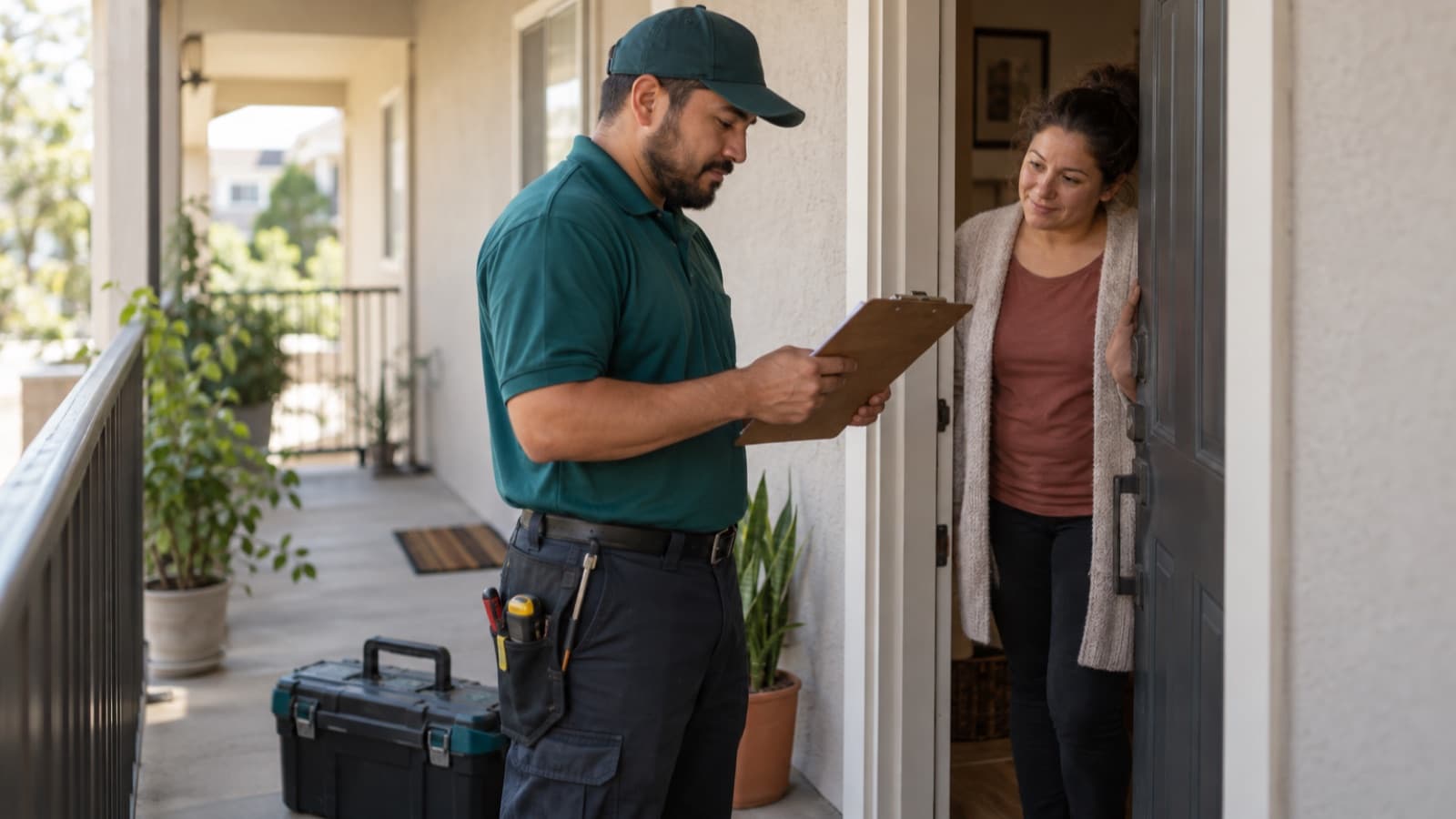
A clear request saves a trip and starts the paper trail. Before you schedule the visit, ask for:
- the address and unit, and who will let you in;
- photos or a short video of the problem;
- who is hiring you, and who can approve the work and any changes (many managers can approve up to a spending limit set by the owner);
- who can authorize emergency work if something urgent comes up, and up to what amount;
- who is responsible for paying, and where the invoice should go.
Ask the last three even if they feel awkward. On a rental, the person who hires you, the person who approves and the person who pays can be three different people.
If you arrive and nobody opens the door, our guide on what to do when the tenant isn't home covers the steps at the door and the report to send.
Send an estimate the owner can approve quickly
Owners approve faster when they can read an estimate in a minute. Include:
- what you'll do, in plain words, and what isn't included;
- labor and materials as separate lines, and the total, including any taxes or fees;
- when you can do the work and how long it will take;
- how long the price is valid;
- your payment terms: when the invoice is due, the ways to pay, and any deposit or stage payments (some pros ask for a deposit on larger jobs or for parts they have to order);
- how extra work will be handled: you'll ask before doing it, except for emergencies under the arrangement agreed above.
Send it in writing to the person who approves, with the photos. Before you start, have the payment terms and the access arrangements agreed in writing, even if it's a short message. When two options make sense, such as repairing or replacing, price both. The owner picks one, and you skip a second round.
Our repair estimate template gives you a format to copy and a filled-in example. The guide for owners on how to compare and approve repair estimates shows what they look for, which helps when you write yours.
If you're unsure what to charge, our guide on how to price handyman jobs helps you build a price list from your real hourly cost.
Get approval in writing, including changes
Approval in writing settles questions later, for you and for the owner. A message like "Approved: replace the sink trap and seal, $180, Thursday morning" (the amount is an example) gives you a written record of the approval. It doesn't replace a contract where one is required: rules on written contracts vary by place and by the size of the job, so check the ones that apply to you. After a phone call, send a short message that confirms what you agreed.
When you find more work on site, ask before you do it and get the answer in writing. For emergencies, follow what you agreed before the visit: who can authorize urgent work and up to what amount. If something can't wait, such as an active leak or a safety risk, do only what makes it safe, then send photos and a note right away. Put emergency work and each approved change on their own lines, so the original approval stays clear. Routine extra work that nobody approved doesn't go on the invoice.
Close the job with proof
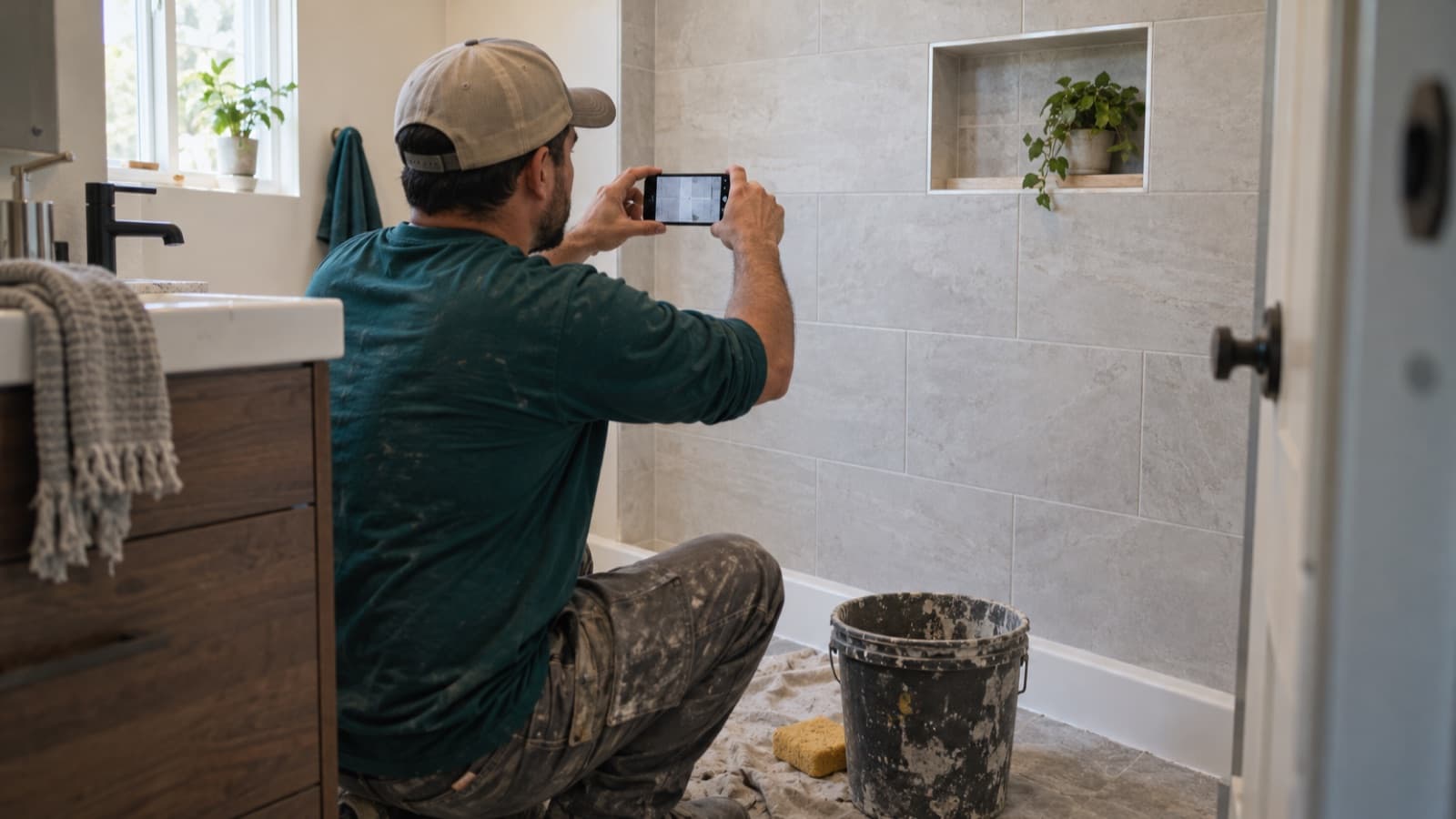
When you finish, send a short closing note the same day:
- before and after photos;
- what you did and the parts you used;
- anything the owner should watch or plan for, like a part near the end of its life or a second problem you noticed;
- the invoice, matching the approved estimate line by line, with approved changes and emergency work on separate lines.
With photos and lines that match the approvals, the person responsible for payment can check the invoice against the approved work. Send it to that person, and copy the manager if a manager approved the work.
Our guide on before and after photos for repair jobs shows which shots to take and how to send them. To ask the owner and the tenant for a review once the job is closed, see how to get reviews for your handyman business.
Follow up on unpaid invoices with a routine
Decide your follow-up steps once and use them for every invoice:
- On the due date, send a short reminder with the invoice attached again.
- A few days later, call or message the person who approves payments and ask whether anything is missing.
- If it's still unpaid, send a firm written notice with the amount, the due date and the work done.
Keep every message with the job, so you can show the whole history if you need it. Formal collection rules depend on your country and state; your local small claims court or a lawyer can tell you what applies.
How RentalThread will make it easier
With RentalThread, owners and managers will send you jobs with the photos, the address, the unit and the details in one place. You'll send your estimate and agree on the visit time in the same thread, so the approval is written down with the job.
As you work, you'll post progress and photos there too, and you'll be able to track whether each job has been paid. The tenant, the manager and the owner will follow the same thread, so nobody has to forward your photos or retype your estimate.
See what we're planning for maintenance pros.
Send it to an owner, manager, agent, tenant or pro who could use it.
Questions, or a topic you'd like us to cover? Write to us at contact@rentalthread.com.