
Repair estimate template: write estimates owners approve
A repair estimate template for maintenance pros on rental jobs: what to include, a filled-in example and how to send it for a clear decision.
 By the RentalThread teamHow we write our guides7 min read
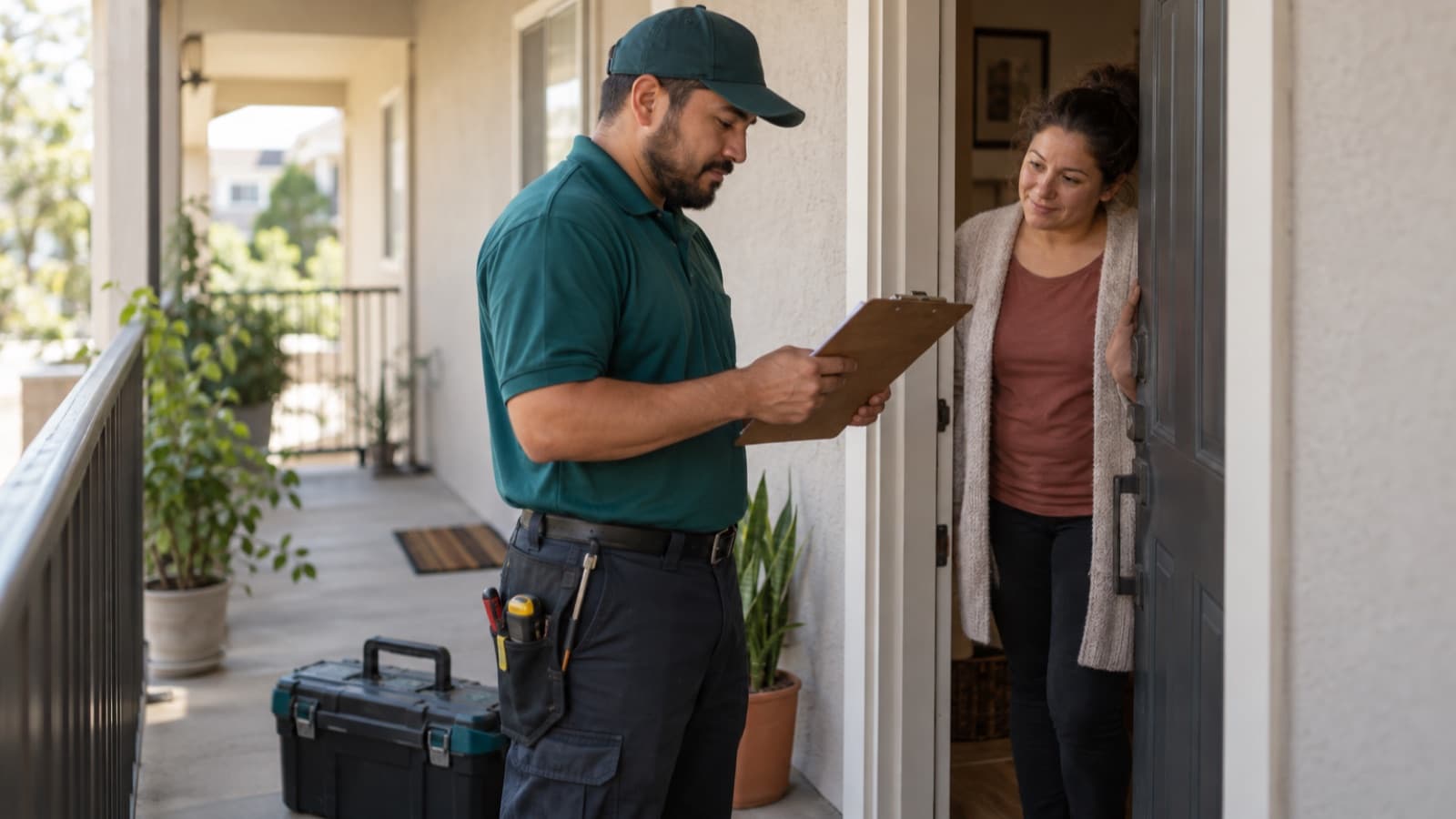
A repair estimate template saves you from writing the same details from scratch on every job, and it helps owners review your estimate with fewer follow-up questions. On a rental, the person who reads your estimate usually hasn't seen the problem. If the estimate shows them what you found, what you'll do and what it costs, they can decide without calling you back.
This guide is for plumbers, electricians, HVAC techs and other maintenance pros who work on rentals for owners and property managers. It covers what to gather before you price a job, what every estimate should include, a template you can copy and an example for a common repair.
Why the estimate decides how fast you start
On most rental jobs, the tenant shows you the problem and someone else approves the money: the owner, or a manager with a spending limit. That person decides from what you send. A clear estimate can get an answer the same day. A vague one gets questions, a second estimate from someone else, or no answer at all while the tenant keeps calling.
The estimate also protects you later. When the invoice arrives, the owner compares it with what they approved. If both list the same work and the same lines, payment is easier to check.
Why estimates sent by text stall
A text that says "Kitchen sink leak, $450, can do Thursday" is quick to send. The owner who reads it is left with questions:
- The owner can't see the problem. Is $450 for a washer or a new drain line?
- Nothing says what's included. Parts, the visit fee, taxes, hauling away the old part?
- It went to the wrong person. The tenant or the manager forwards it, and the owner reads it days later without your photos.
- There's no plan for surprises. If you open the wall and find more damage, nobody knows what happens next.
Each question means another call or message before you can start the work.
What to gather before you price the job
You can't write a clear estimate without the basics. Get them before or during your first visit:
- the address and unit, and who lets you in;
- what the tenant reported, in their words, and when it started;
- photos of the problem and of the area around it, plus a wider shot that shows where it is;
- model numbers or labels of the fixture or appliance, if you can see them;
- who approves the work, and up to what amount without asking the owner;
- who pays and where the invoice goes.
If you can't diagnose without opening something up, say so. Price the diagnosis on its own, or give a range and explain what decides the final number.
If you keep these answers on a maintenance work order, you can repeat its number on the estimate and the invoice.
To set the price itself, our guide on how to price handyman jobs shows how to work out your real hourly cost and choose between hourly and flat pricing.
What a repair estimate should include
Every estimate you send, short or long, should answer the same questions:
- Who and where. Your business name and contact details, the client's name, the property address and the unit.
- The problem. What you found, in plain words, with the photos attached.
- The work. What you'll do, step by step, and what isn't included.
- Parts and labor on separate lines. Each part with its brand or model and quantity. Labor as hours times a rate, or a flat price for the task.
- Other charges. Visit or diagnostic fee and whether it's credited if the job is approved, permits, disposal, travel.
- The total, with any taxes included, and whether it's a fixed price or an estimate that may change.
- Timing. When you can start and how long the job takes, including any wait for parts.
- Warranty. How long it covers your labor and the parts, and what it doesn't cover. Our guide to workmanship warranties has wording you can copy.
- Payment terms. When the invoice is due, how you take payment, and any deposit for parts you have to order.
- Valid until. The date after which you'll need to check prices again.
- Changes. What happens if you find more work: you stop, send photos and a price, and wait for written approval.
Some jobs need a license or a permit, especially gas, electrical and structural work, and tax and invoicing rules vary by country and state. Check the rules where the property is, and put your license number on the estimate where it applies.
Repair estimate template you can copy
Copy these fields into a document, a note on your phone or your invoicing app, and fill them in for each job:
| Field | What to write |
|---|---|
| Estimate number and date | A number you'll repeat on the invoice |
| From | Business name, phone, email, license number if required |
| For | Client name; who approves, if different |
| Property | Address, unit, who lets you in |
| Problem found | One or two sentences, plus "photos attached" |
| Work included | Numbered steps |
| Not included | What's left out, such as patching drywall or painting |
| Parts | Item, brand or model, quantity, price |
| Labor | Hours and rate, or a flat price per task |
| Other charges | Visit fee, permit, disposal |
| Taxes | If they apply where you work |
| Total | One number, with taxes |
| Price basis | Fixed price for the listed scope, or an estimate that may change (say what could change it) |
| Start date and duration | "Thursday, 9 AM, about 2 hours" |
| Warranty | Length; what it covers |
| Payment terms | Due date, payment methods, deposit if any |
| Valid until | A date |
| Extra work | "If I find work outside this scope, I'll send photos and an updated price and wait for written approval before doing that extra work" |
| Approval | "Reply 'Approved' with the total to confirm" |
Keep the approval line: when the owner replies with the total in writing, the approval sits with the estimate.
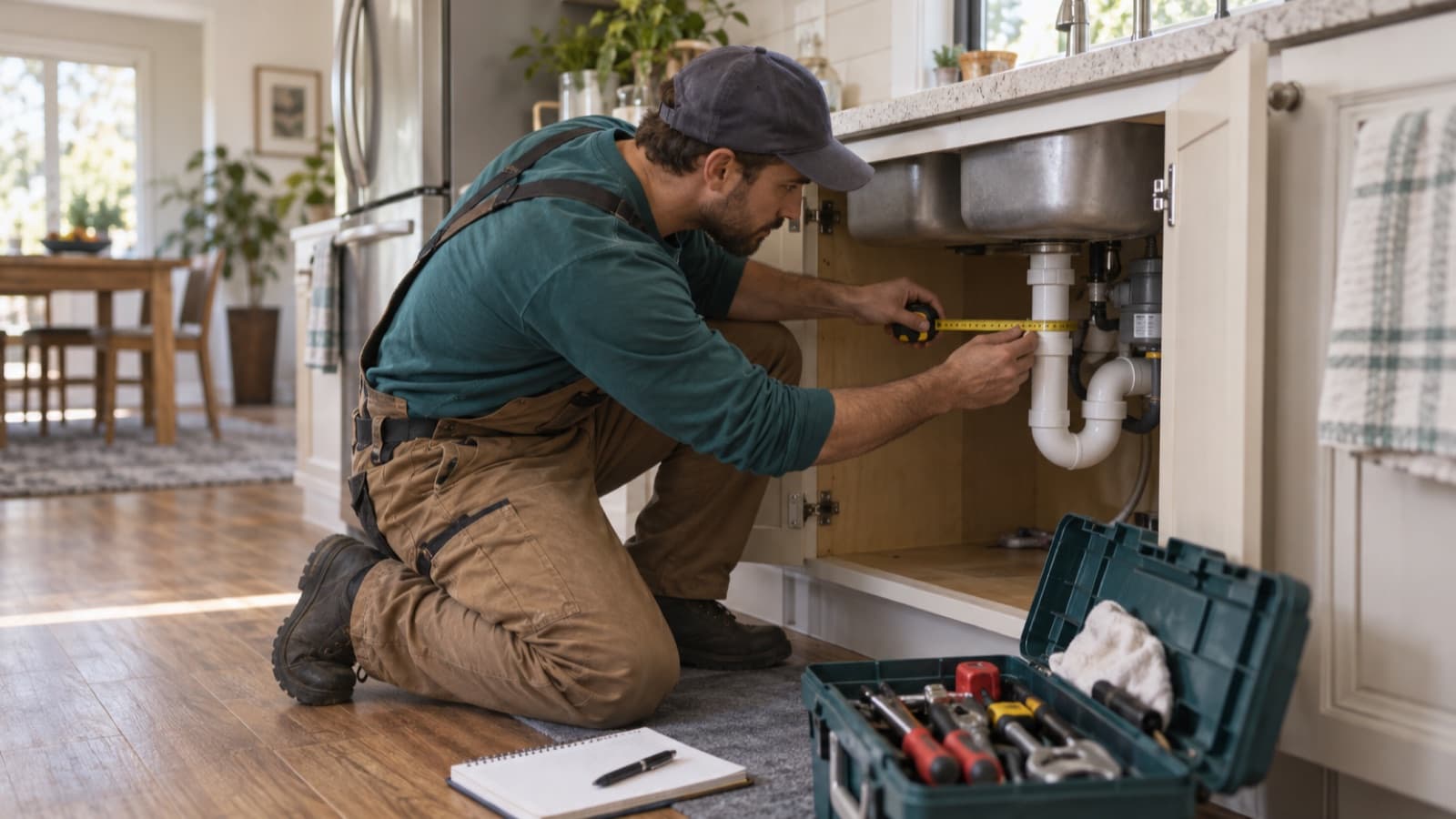
Example: a leaking kitchen sink at Apt 4B
The template filled in for a common job (the names and prices are only examples):
- Estimate: #112, Oct 26
- From: Diego Ramos Plumbing
- For: Laura Chen (owner)
- Property: 18 Maple Street, Apt 4B; the tenant, Sam, is home after 5 PM
- Problem found: the slip joint on the sink's drain trap is cracked and leaks when the sink drains. The cabinet floor is damp but solid (photos 1–3).
- Work included: replace the P-trap and slip nuts, test for leaks with the sink full, dry the cabinet and photograph the finished work.
- Not included: replacing the cabinet floor if it turns out to be soft once it dries.
| Line | Amount |
|---|---|
| P-trap kit, 1½ in, PVC (1) | $18 |
| Labor, flat price | $120 |
| Visit fee (credited if approved) | $0 |
| Subtotal, before tax | $138 |
| Sales tax (example; rates and what's taxed vary by state) | $11 |
| Total | $149 |
- Price basis: fixed price for the listed scope; extra work needs separate written approval
- When: Thursday, 5:30 PM, about 1 hour
- Warranty: 1 year on labor; parts per the manufacturer
- Payment: due 15 days after the invoice, by bank transfer or card
- Valid until: Nov 9
- Extra work: if I find work outside this scope, I'll send photos and an updated price and wait for written approval before doing that extra work.
- Approval: reply "Approved, $149" to confirm.
An owner can read that on a phone and answer without calling you.
Send it so it gets an answer
A clear estimate can still sit unanswered if it goes to the wrong person or arrives without the photos. When you send it:
- Send it in writing to the person who approves, with the photos in the same message. If a manager approves up to a limit, send it to the manager and say whether it fits that limit.
- Offer two options when both make sense, such as repairing or replacing, each with its own total. The owner picks one and you skip a second round.
- After a phone call, confirm in writing: "As we discussed, approved: replace the P-trap, $149 total with tax, Thursday 5:30 PM."
- Follow up once, after a day or two, with the estimate attached again.
- Keep the estimate with the job, so the invoice can match it line by line.
To see what owners check when estimates arrive, read our guide on how to compare and approve repair estimates. Once the work is done, our guide on getting paid faster as a contractor covers closing the job and following up on the invoice.
When the work is done, our guide on how to write a repair invoice turns this estimate into the invoice, line by line.
How RentalThread will make it easier
With RentalThread, owners and managers will send you jobs with the tenant's photos, the address, the unit and the details already in one place, so you'll have most of what you need before you price the job.
You'll send your estimate and agree on the visit time in the repair's own thread. The owner will see your estimate next to the photos and approve it there, so the approval is written down with the job. As you work, you'll post progress and the finished photos in the same thread and track whether the job has been paid. See what's planned for maintenance pros.
Send it to an owner, manager, agent, tenant or pro who could use it.
Questions, or a topic you'd like us to cover? Write to us at contact@rentalthread.com.