
Moving into an apartment checklist: your first week
A moving into an apartment checklist for renters: utilities, keys, photos, address changes and who to call, day by day through your first week.
 By the RentalThread teamHow we write our guides6 min read

This moving into an apartment checklist covers the first week after you get the keys. You can unpack at your own pace, but a few jobs cost money when they slip: a late fee on a utility account you never opened, a deposit deduction for damage that was already there, a weekend with no hot water and no number to call.
The list is for renters in an apartment or a house. Print it, stick it on the fridge and tick things off as you go.
Why the first week is easy to get wrong
Moving week is tiring, and the small admin jobs get pushed back:
- Utilities sit in someone else's name, or in nobody's. The power may still be on from the last tenant, until it isn't.
- Photos get taken late. Once your furniture is in, it's hard to prove the floor was already scratched.
- Contacts live in old messages. The agent who showed you the place may not be the person who handles repairs.
- Mail keeps going to the old address. Bank letters, bills and packages can go missing for weeks.
Before move-in day
A few jobs are best done before the truck arrives:
- Read the lease once more. Check the rent, due date, deposit, who pays which utilities and how to report repairs.
- Ask which utilities you need to open. Electricity, gas, water, trash, internet: some may be included in the rent, some in your name. Ask the owner or manager which ones, and the account or meter numbers if they have them. Then set up the ones in your name to start on your move-in date, so the power and water are on when you arrive.
- Book the internet installation. Installers can be booked days or weeks out, so ask for the earliest slot after your move-in date.
- Check the building rules for moving. Some buildings require you to book the elevator, use a loading dock or move only at certain hours.
- Pack a first-night box. Toilet paper, a towel, sheets, phone chargers, a light bulb, basic tools, cleaning supplies and something to eat.
Day one: keys, meters and photos
Get every key, and test it
- Count the keys you receive and write the number down: front door, building, mailbox, storage, garage remotes, fobs.
- Try each key and remote before the owner, manager or agent leaves.
- Ask whether anyone else has a key, and whether the locks were changed after the last tenant. If they weren't, ask whether they can be. Who pays for that depends on the lease and on local rules.
Read the meters
Take a photo of each meter (electricity, gas, water) with the reading visible, and note the date. The photo helps you check your first bills and question a starting reading that looks wrong. If the building shares a meter between units, ask how the bill is split.
Photograph everything before you unpack
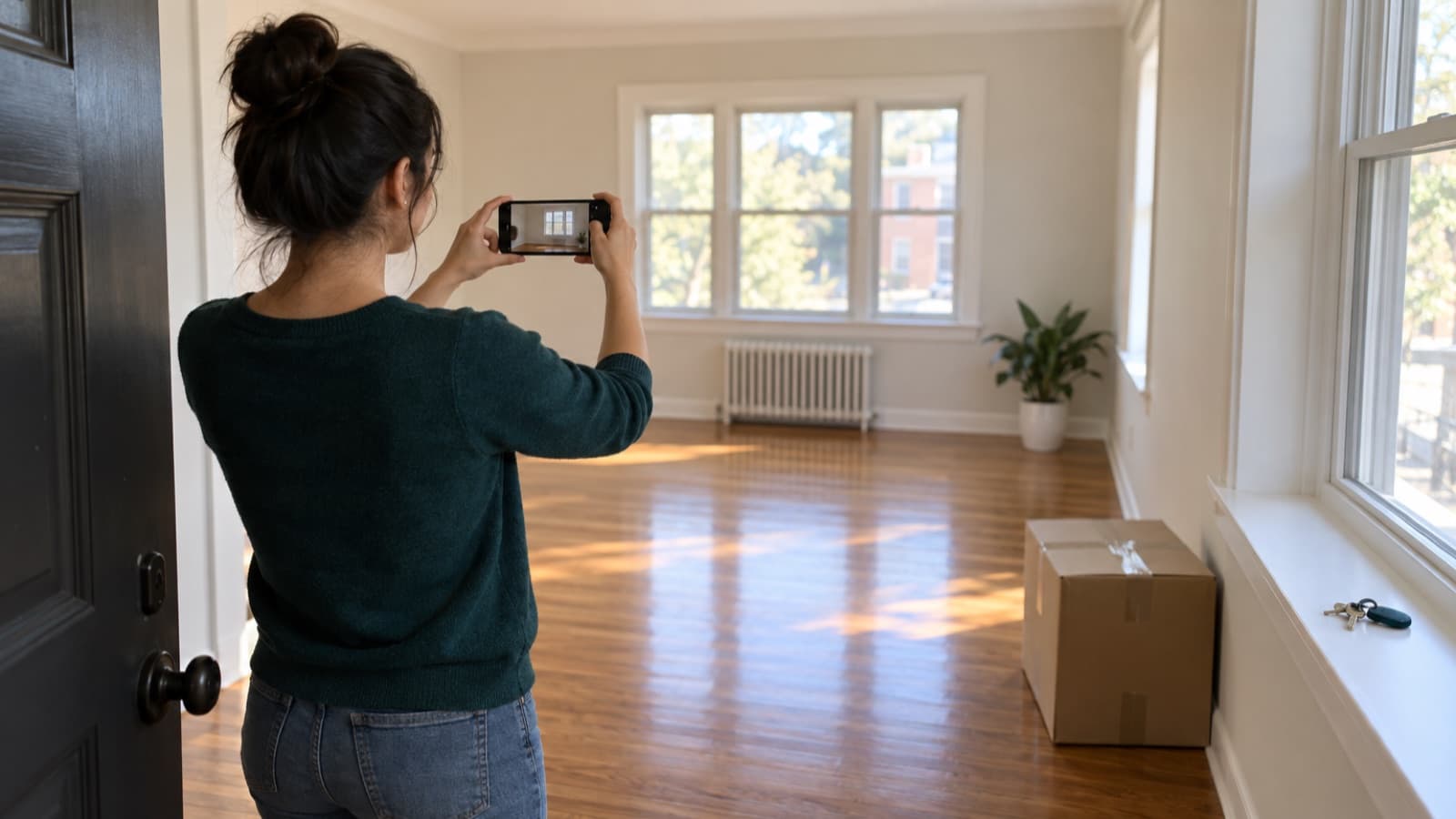
Do this before the furniture goes in, because these photos are your record when the deposit comes back. Walk the empty apartment with your phone:
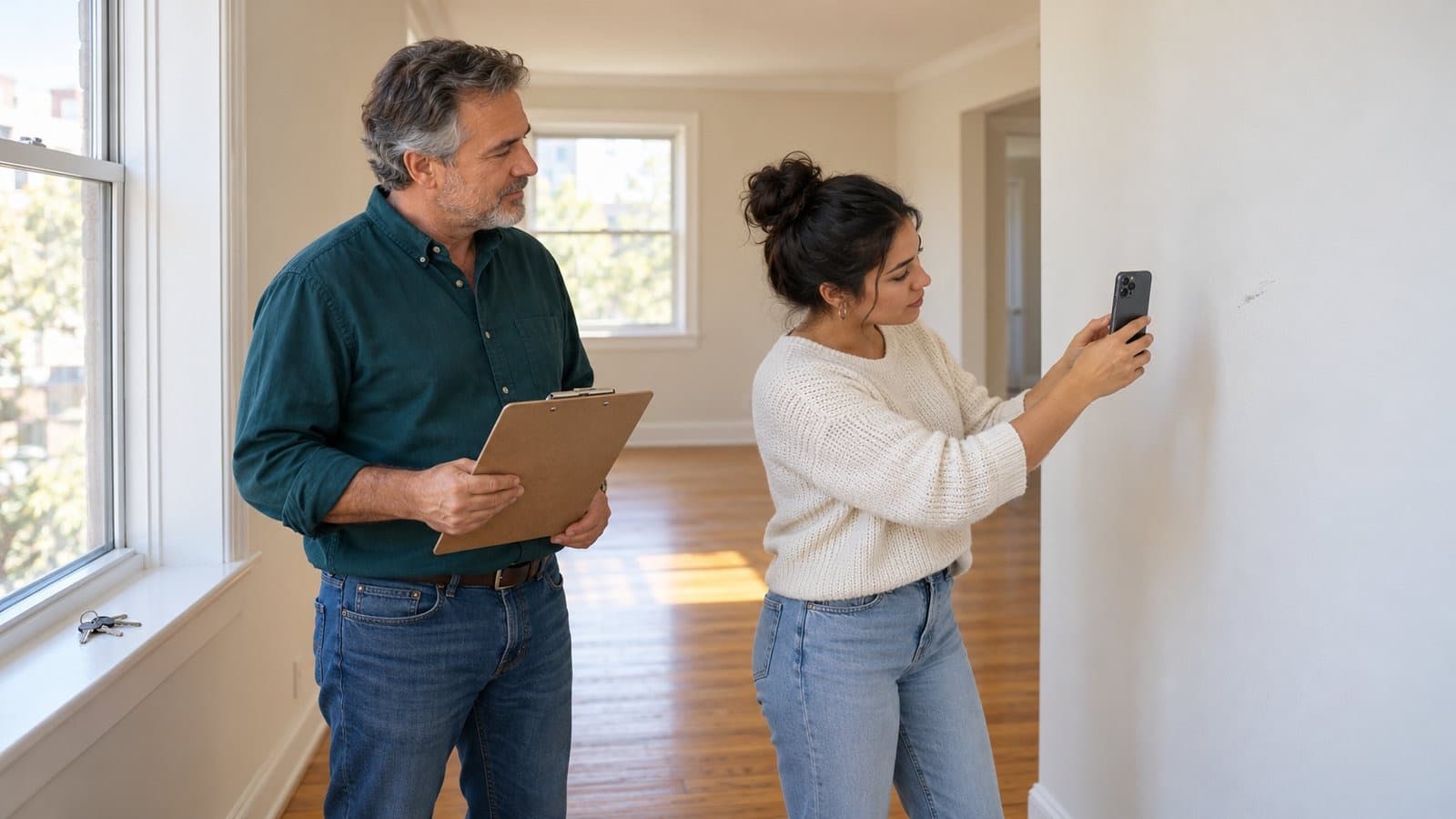
- One wide photo of each room from the doorway, then close-ups of every scratch, stain, chip, crack or damp patch.
- Short videos of things that work or don't: faucets, the shower, the stove, the heating or AC.
- Keep the original files, which store the date and time, and back them up somewhere other than your phone.
If the owner or manager does a move-in inspection with you, go through it together, ask them to correct anything missing or wrong before you sign the report, and keep a copy. Our move-in inspection checklist goes room by room through what to check and what to write down. If nobody offers one, send your photos and a short list of what you found in writing, the way and by the deadline your lease or local rules set. If they set none, email them in the first days, so there's a dated record on both sides.
The first three days: utilities and safety
- Check that each utility in your name is on, and open any you missed. Keep the confirmation emails and account numbers in one folder.
- Find the shut-offs. Locate the main water valve, the electrical panel and the gas shut-off, and check that the breakers are labeled. You'll need them in an emergency.
- Know what to do if you smell gas or a carbon monoxide alarm goes off. Leave the building first, then call the gas company or emergency services from outside. Don't wait for the owner to reply, and don't look for the leak yourself.
- Test the smoke and carbon monoxide detectors. If one is missing or doesn't work, tell the owner or manager in writing.
- Run the water and appliances. Hot water, toilet flush, drains, stove, oven, fridge, washer. Small problems are easier to report now, while you can still say they were there when you moved in.
- Look for pests and leaks under sinks, behind the fridge and around windows.
By the end of the week: address, contacts and papers
Change your address
- Request mail forwarding from the postal service.
- Update your bank, card, employer, phone plan, insurance and any subscriptions that ship to you.
- Update government records that need your address, such as your ID, voter registration or tax records, according to the rules where you live.
- Update delivery addresses in the apps you shop with.
Make a "who to call" list
Write down, in one place:
- The owner or manager for day-to-day questions, and how they prefer to be contacted.
- Who to call for an emergency at night or on a weekend: a leak, no heat, a lockout.
- How to report a non-urgent repair: email, a portal, a text.
- The building's front desk or super, if there is one.
- Utility outage lines and your internet provider's support number.
When something breaks, our guide on how to request repairs from your landlord has a short message you can copy.
Keep your papers together
Put these in one folder, paper or digital: the signed lease, the deposit receipt, your move-in photos and report, the utility confirmations and every rent receipt from now on. If the owner or manager doesn't send a receipt with each payment, ask for one.
Settle in with the building
- Learn the trash and recycling days, laundry rules and quiet hours.
- Ask how packages are handled.
- Consider renters insurance if you don't have it. Some leases require it.
Moving into an apartment checklist at a glance
- Lease read again: rent, due date, utilities, how to report repairs
- Internet installation booked
- Every key and remote counted and tested
- Meter readings photographed, with the date
- Every room photographed before unpacking
- Move-in report checked and signed, or photos and notes sent in writing
- Utilities in your name set up and working
- Water, electrical and gas shut-offs located
- Smoke and carbon monoxide detectors tested
- Appliances, water and drains checked; problems reported in writing
- Mail forwarding requested and address updated
- "Who to call" list written, including emergencies
- Lease, deposit receipt, photos and receipts in one folder
Rules on deposits, inspections, lock changes and utility accounts vary by country, state and city. Check the rules where you live, or ask a local tenant advice service, if something in your lease seems unclear.
When the lease ends, you'll use these photos and papers to get your security deposit back.
How RentalThread will make it easier
With RentalThread, your move-in report and its photos will be saved with your home, where you and the owner see the same record. Your lease and documents will sit in one place, with a notice before renewal.
A home guide will keep the details you'd otherwise search old messages for: how the appliances work, the Wi-Fi, trash days and house rules. When something breaks, you'll report it from your phone with photos or a video, AI will turn your message into a clear request that you check before sending, and you'll see who is coming and when. See what's planned for tenants.
Send it to an owner, manager, agent, tenant or pro who could use it.
Questions, or a topic you'd like us to cover? Write to us at contact@rentalthread.com.