
How to get your security deposit back when you move out
How to get your security deposit back: what owners can deduct, what to do before and on move-out day, and how to dispute a deduction in writing.
 By the RentalThread teamHow we write our guides6 min read
To get your security deposit back, you need to show three things: the home is in the same condition as when you moved in, apart from normal wear; you paid what you owed; and you left the way your lease asks. Most of that comes down to records you can start keeping now, plus a few steps in your last weeks.
This guide is for tenants. It covers what owners can usually deduct, what to do before you move out and on the day you hand over the keys, and what to do if a deduction looks wrong.
Why tenants lose part of their deposit
A deposit protects the owner against unpaid rent and damage. Most disagreements start with ordinary gaps:
- No record of the move-in condition. Without photos or a signed report, it's your memory against the owner's when they find a stain or a scratch.
- Repairs nobody wrote down. You reported the leak by phone a year ago, and now the water stain looks like damage.
- Cleaning and leftover items. Trash, furniture or a dirty oven left behind can be charged for.
- Money still owed. The last month's rent, a utility bill in the owner's name, a late fee.
- Missing keys or notice. Keys, remotes or parking cards not returned, or notice given later than the lease requires.
- No forwarding address. The refund or the list of deductions goes to the old address, and nobody follows up.
What owners can usually deduct
In most places, the owner can deduct unpaid rent and the cost of repairing damage beyond normal wear. Normal wear is what time and everyday use do to a home: lightly scuffed paint, worn carpet in walkways, small nail holes. Damage comes from a specific event or neglect: a large hole in the wall, burns in the carpet, a broken door.
Other charges, such as cleaning fees or utilities left unpaid, depend on local rules: a charge written in the lease isn't automatically a valid deduction.
Our move-out inspection checklist has a table of common examples on each side of that line, and explains why the age of an item matters.
The rules differ by country, state and city: how much a deposit can be, what counts as a valid deduction, how long the owner has to return the money and whether an itemized list with receipts is required. Check the rules where the property is, and read your lease to see which charges it mentions.
Steps to get your security deposit back before you move out
Give notice as soon as you decide to move; the other steps fit in your last two to four weeks:
- Reread your lease and give notice in time. Look for the notice period, how to give notice, cleaning requirements and how the deposit is returned, and check the local notice rules too. Give notice in writing by the deadline, through the channel your lease names, and keep a copy with the date. If you need to leave before the lease ends, our guide on how to break a lease early covers the notice, the possible costs and a letter you can adapt.
- Gather your records. The move-in report and photos, your written repair requests and the replies, and your rent receipts. If you reported problems in writing, those messages show they weren't caused at the end. Our guide to requesting repairs from your landlord explains how to keep that record.
- Pay what you owe and keep the receipts. That includes the last month's rent and any utilities in your name. Don't use the deposit as your last month's rent unless the owner agrees in writing and local rules allow it.
- Repair damage you caused. Replace bulbs, put back anything you changed and fix damage you're responsible for. Small nail holes are often normal wear, so ask in writing before you patch or repaint, and whenever you're unsure whether a repair is yours.
- Clean after your things are out. An empty home is easier to clean and to inspect. Pay attention to the kitchen, the bathroom and the floors.
On move-out day
On the last day, you and the owner record the condition the deposit will be settled on:
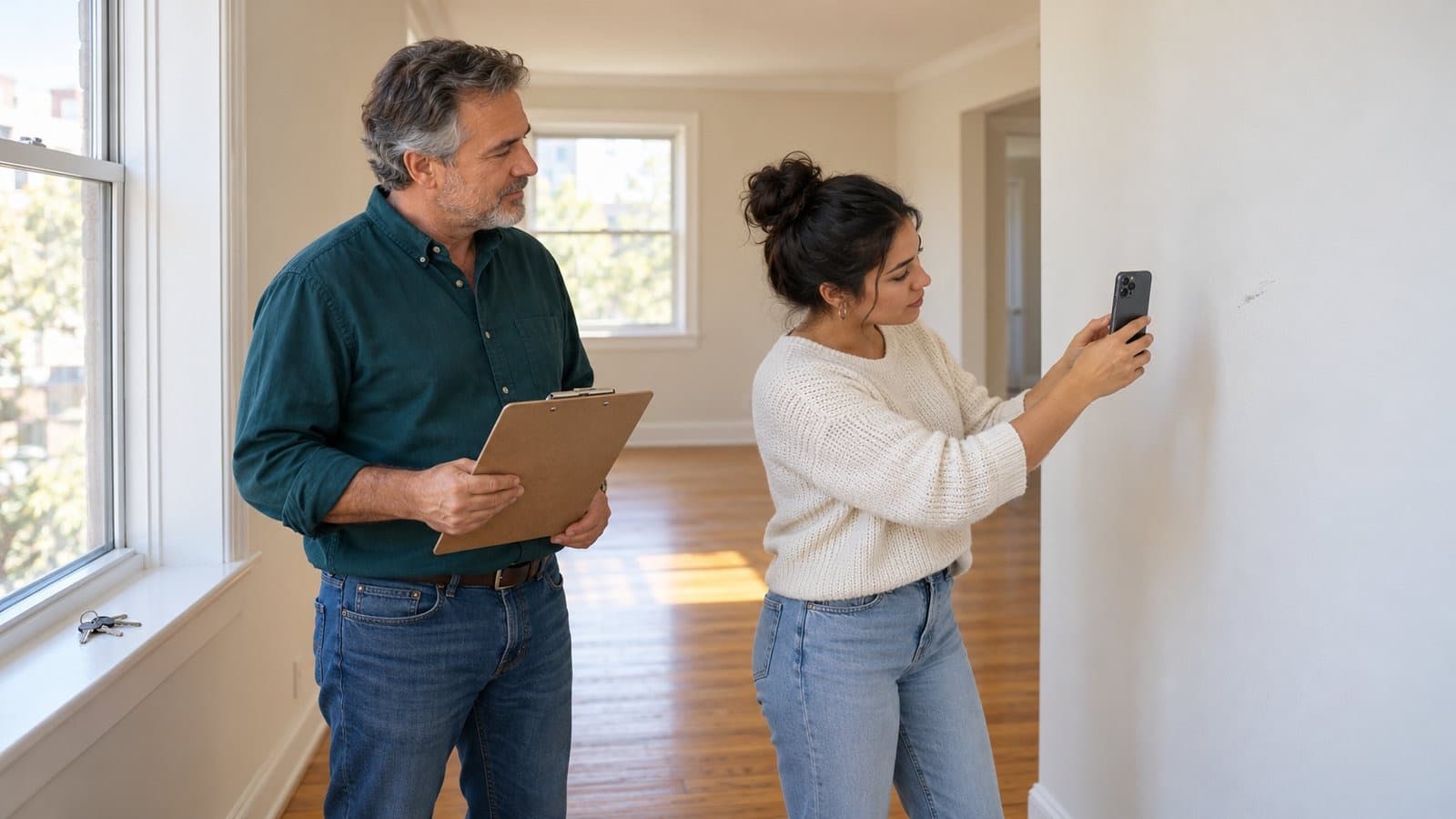
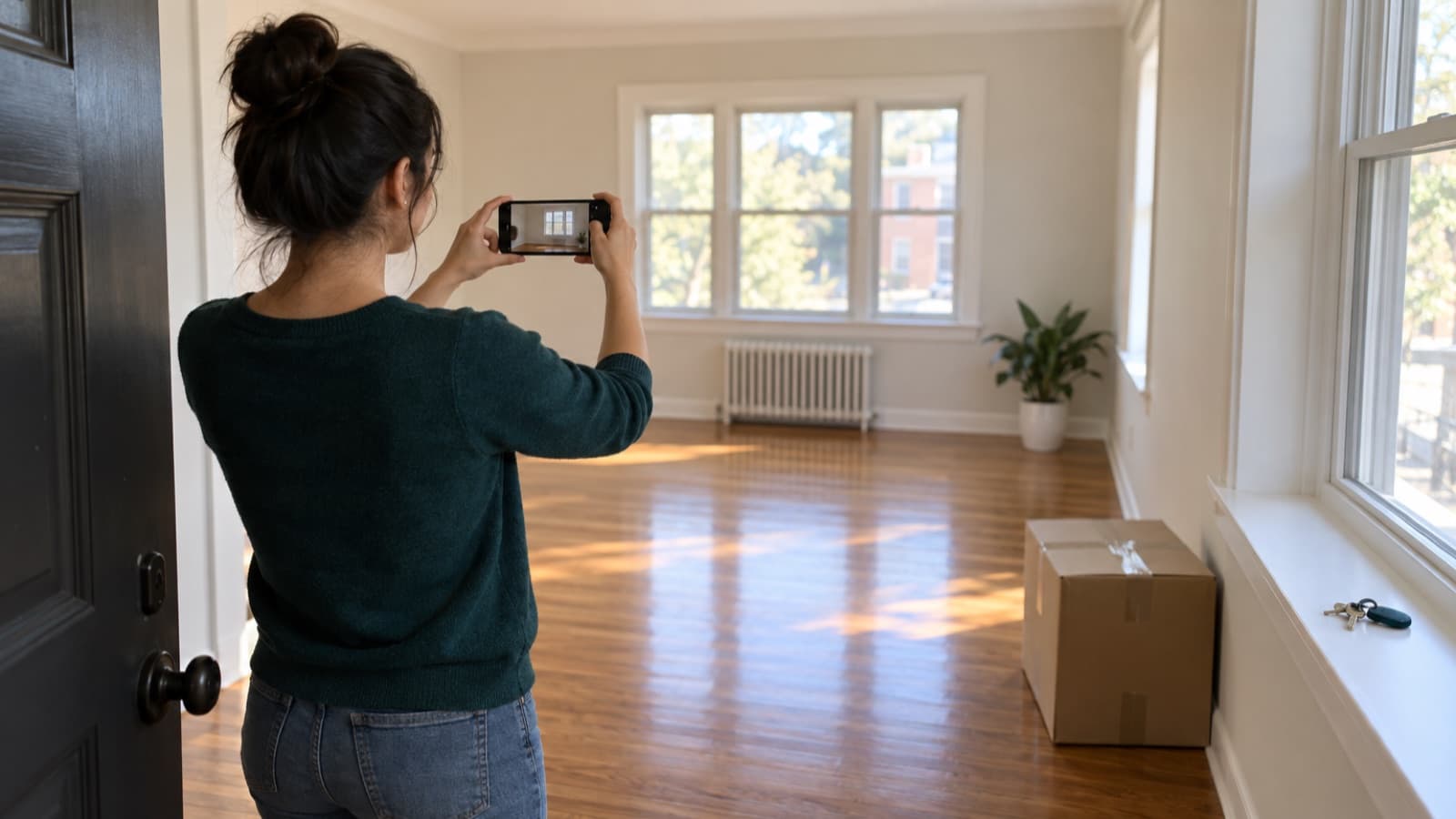
- Photograph and film every room empty, with the same angles as your move-in photos if you have them, plus close-ups of anything that changed. Take photos of the utility meters too. Keep the files until the deposit is settled.
- Ask for a walkthrough with the owner or manager. Go room by room with the move-in report. If you disagree about an item, say so and ask for both views to be written down. Sign the condition record if it's accurate; if it isn't, write what you disagree with next to your signature.
- Return every key, remote and card, and ask for a written note of what you returned and when. A text message counts.
- Give your forwarding address in writing, plus the account details for the refund if the owner pays by transfer.
If the owner can't attend, do your own walkthrough, film it, and send the photos and video the same day with a short message.
After you hand over the keys
Ask when to expect the refund. Many places set a legal deadline for it; where none applies, the lease may set one. If the deadline passes with no refund and no explanation, send a dated written request for the deposit and a list of any deductions, and keep proof that you sent it. A local tenant advice service can tell you the next steps and their deadlines.
If the owner keeps part of the deposit, ask for an itemized list: each deduction, the reason and the receipt or estimate behind it. Then check each item against your photos.
If a deduction looks wrong, reply in writing, calmly, one item at a time:
Hi Ana, thanks for the list. I agree with the $40 for the missing parking remote. I don't agree with the $250 for repainting the living room: the marks are small nail holes from pictures, which look like normal wear after two years, and the move-in report noted scuffs on the same wall (photo 12, attached next to my move-out photo). Could you review that item and send the corrected amount? Thanks.
Put the move-in and move-out photos of the item side by side; that's often enough. If you don't hear back, follow up once or twice in the same thread with the dates of your earlier messages.
If you still can't agree, a local tenant advice service, legal aid or consumer protection office can tell you your options. In many places that means a demand letter and then a small claims court, where your written record with dates and photos is the main evidence. Ask before you take a step, because the rules and deadlines vary.
How RentalThread will make it easier
With RentalThread, your lease, your rent receipts and your past repairs will be kept in one place, so the records this guide asks you to gather are already together at move-out.
You'll report a problem from your phone with photos or a video, and AI will turn your message into a clear request that you review before it's sent. Each repair will stay in its own thread with dates: what you reported, when someone came and when it was fixed. When the owner and you sit down to settle the deposit, you'll both look at the same history. See what's planned for tenants.
Send it to an owner, manager, agent, tenant or pro who could use it.
Questions, or a topic you'd like us to cover? Write to us at contact@rentalthread.com.