
Mold in your rental apartment: what to do
Found mold in your rental apartment? How to find the cause, what you can clean, how to report it to the owner and what to do if nothing happens.
 By the RentalThread teamHow we write our guides6 min read
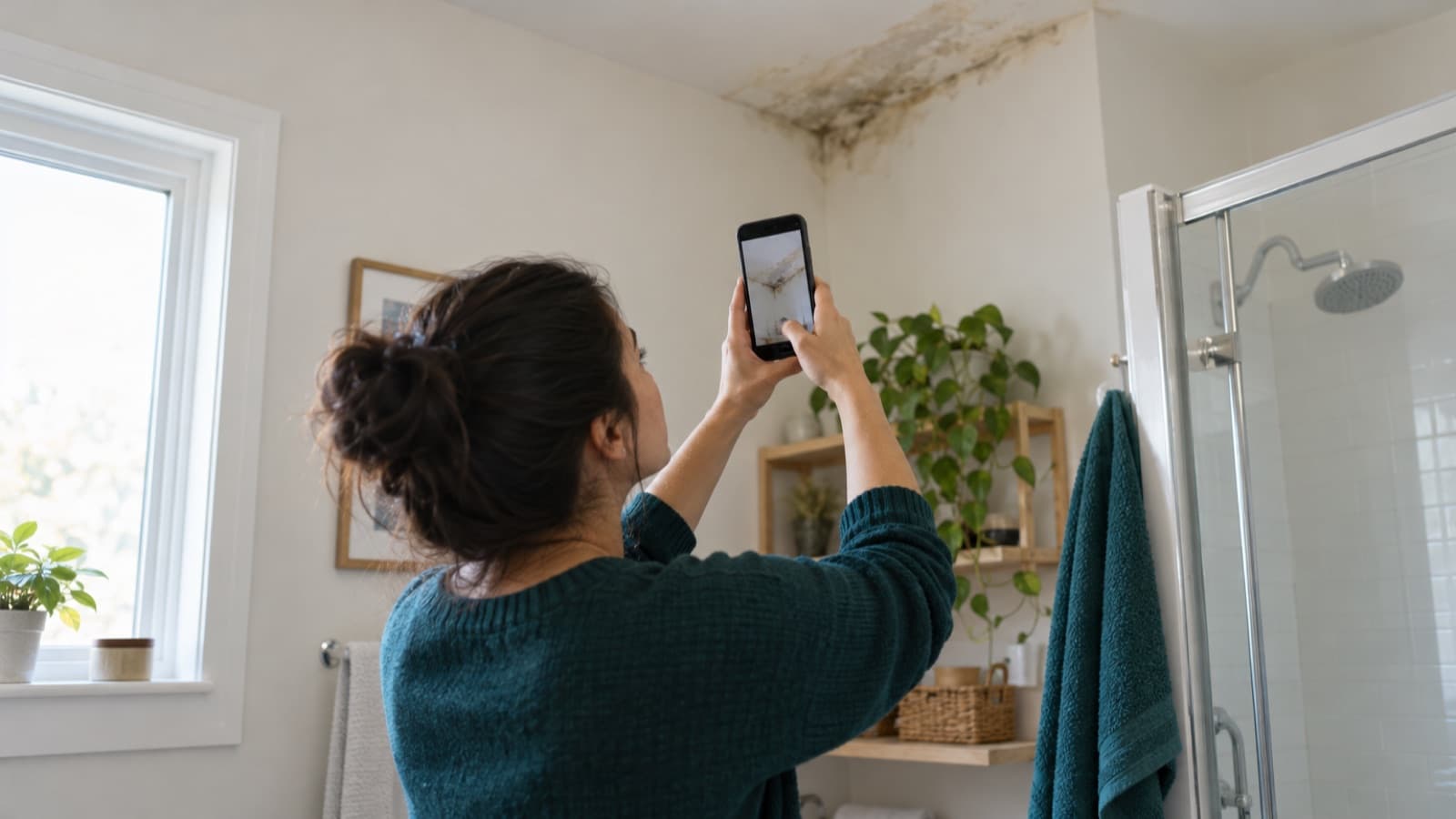
A dark patch shows up in the corner of the bathroom ceiling, or the wall behind the bed smells musty. If you find mold in your rental apartment, the first few days matter. Report it early, with photos. Cleaning alone won't stop mold coming back while the moisture is still there, and a dated record helps if anyone later asks who should pay.
This guide is for tenants.
Why mold in a rental apartment gets complicated
Mold grows where there's moisture. If you clean the spots and the moisture stays, the patch comes back, usually in the same place. Someone has to find and fix the source: a leak, condensation or a room that can't vent its steam.
In a rental, a few things make that harder:
- The cause isn't obvious. A stain on the ceiling could be a leak from the unit above, a roof problem or steam from your own shower.
- Responsibility depends on the cause. Owners usually handle leaks and building defects, while day-to-day ventilation is often the tenant's job. Both sides can point at the other.
- Health worries make it tense. The US Environmental Protection Agency says that mold can cause allergic reactions in sensitive people and can trigger asthma attacks in people with asthma who are allergic to it. If anyone at home has symptoms, talk to a doctor.
- Reports get lost. You send a photo in a chat and mention it in the hallway. Three weeks later, nobody remembers when it started.
Step 1: look for the water
You don't need to know the cause before you report the problem. If it's safe, spend ten minutes looking for signs of moisture, without touching the patch. The owner can then send the right pro the first time.
- Is it near a pipe, a window or the ceiling below another unit? That points to a leak or water coming in from outside.
- Is it in a bathroom or kitchen with no working exhaust fan? That points to steam with nowhere to go.
- Is it on an outside wall, behind furniture or in a closet? Cold walls with little airflow collect condensation.
- Do you see dampness or dripping, or is the patch spreading? Look, don't touch. Ongoing water can mean a leak, though condensation can do the same, so the owner's pro needs to check.
- Do you see water drops on windows in the morning? That's a sign of high humidity indoors.
Write down what you find, even if you're not sure. "It's on the ceiling under the bathroom of 5B" helps the owner more than "there's mold".
Step 2: document it before you touch it
Take photos and a short video before you clean anything:
- One wide shot so the owner can see where in the room it is.
- One close-up with something for scale, like a coin or a tape measure.
- The date. Your phone records it, but say it in the message too.
- Anything nearby: a water stain, peeling paint, a dripping pipe, a broken fan.
Then take a new photo from the same spot every week. If the patch grows or comes back after cleaning, the photos show it.
Step 3: clean small spots safely
The EPA's guide says that if the moldy area is less than about 10 square feet, you can usually handle the cleanup yourself. Size isn't the only test. The same guide says to call a professional when the water was contaminated, such as sewage, and to get expert advice after heavy water damage. If you have health concerns, it says to talk to a health professional before you start cleaning. Its main tips for a small patch:
- Scrub hard surfaces with detergent and water, then dry them completely.
- Protect yourself: an N-95 respirator, gloves and goggles without ventilation holes.
- Don't routinely use bleach, and never mix bleach with cleaners that contain ammonia, because the fumes are toxic.
- Don't paint over it. Paint on a moldy surface is likely to peel.
- Leave porous materials alone. Carpet or ceiling tiles that are moldy may need to be thrown away, and in a rental that's the owner's call.
Clean only what's safe and within reach. Leave larger areas, mold inside walls or anything near the electrical system to the owner and their pro. The EPA also says that when you can see mold, testing it usually isn't necessary, so you don't need to pay for a lab test to report it.
Step 4: report it to the owner in writing
Report it as soon as you can, through the channel your lease names. If water is actively leaking, or it's near outlets, lights or wiring, use the emergency repair contact right away and stay clear of the wet area. A call is fine to start, but follow it with a written message and keep a copy. Include:
- Where it is and roughly how big.
- When you first noticed it, and whether it has grown.
- What you think the source is, and what you saw: a leak, a stain, a broken fan.
- Your photos and video.
- What you already did, such as cleaning a small spot or running a dehumidifier.
- Anyone at home it affects more, such as someone with asthma or allergies.
- Your availability for a visit.
For example:
Hi Laura, there's a mold patch about the size of a dinner plate on the bathroom ceiling at Apt 3C, 42 Cedar Avenue. I first saw it on Oct 12 and it has doubled since. There's a brown water stain next to it, right under the bathroom of 4C. The exhaust fan works. Photos from Oct 12 and today are attached. My son has asthma, so I'd like to get the cause checked soon. I'm home after 3 PM on weekdays. Could you let me know who will come and when?
Our guide to requesting repairs from your landlord has more on writing reports and following up.
Step 5: cut the moisture while you wait
Some steps help whatever the cause, and they also show you're doing your part:
- Run the exhaust fan during showers and cooking, and for a while after. If it's broken, report that too.
- Open a window for a few minutes a day when the weather allows.
- Keep furniture a few inches away from outside walls.
- Dry clothes outside or in a vented dryer when you can.
- Wipe condensation off windows in the morning.
The EPA recommends keeping indoor humidity below 60 percent, ideally between 30 and 50 percent. A cheap humidity meter tells you where you are.
If the owner doesn't act
Follow up in the same message thread after a few days, and add new photos. If nothing happens, many places have a local housing or code enforcement office, or a health department, that can inspect. Tenant advice services can explain your options.
Who pays and how fast the owner must act depend on your lease and local law, and they differ a lot by country, state and city. So do your options if repairs don't happen, such as rent reductions or ending the lease. Check the rules where the property is before you withhold rent or hire someone yourself. Our guide on who pays for repairs covers the questions that usually decide it.
How RentalThread will make it easier
With RentalThread, you'll report a problem from your phone with photos or a video. AI will turn your message into a clear request with the details the owner needs, and you review it before it's sent.
Each repair will have its own thread, so your first photos, the owner's reply and the pro's visit stay in one place with their dates. You'll see who's coming and when. And the move-in report with photos will show what the walls looked like on day one. See what's planned for tenants.
Send it to an owner, manager, agent, tenant or pro who could use it.
Questions, or a topic you'd like us to cover? Write to us at contact@rentalthread.com.