

How long to keep rental property records, and which ones
How long to keep rental property records: receipts, leases, repair invoices and improvement records, plus questions to ask your accountant.
 By the RentalThread teamHow we write our guides6 min read
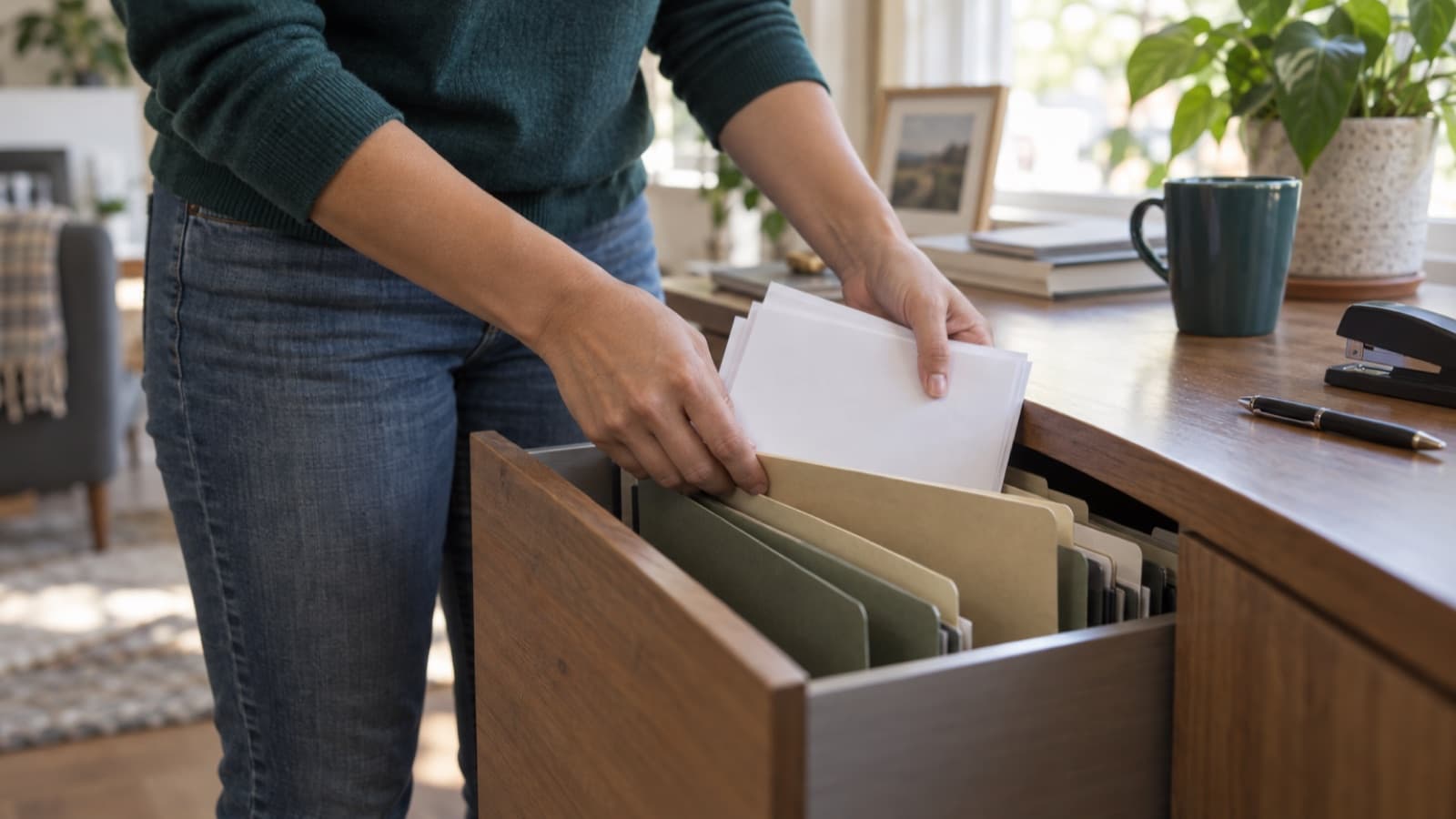
How long to keep rental property records depends on what each record proves. A rent receipt backs up one year's tax return. The invoice for a new roof can matter for as long as you own the house, and for years after you sell it. A deposit record matters until the deposit is settled, and sometimes after. So you can let some papers go after a few years and keep others until well after a sale.
This guide is for owners with one or a few rentals. It lists the records worth keeping, how long each one usually matters, and what to confirm with an accountant where your property is.
Why the right records matter at tax time and in disputes
Your records support what you report on your tax return: the rent you received and the expenses you deduct. They also settle questions with tenants, insurers and buyers: what the deposit was, when the water heater was replaced, who approved a repair.
In the US, the IRS says in its tips on rental real estate that you "generally must have documentary evidence, such as receipts, canceled checks or bills, to support your expenses." If the IRS reviews your return, you'll have a hard time defending an expense you can't document.
Why receipts go missing
The plumber sends a photo of a handwritten invoice in a chat. The hardware store receipt fades in a jacket pocket. Rent arrives by transfer with no note. A tenant paid the deposit years ago, by a check nobody scanned.
Then a question comes up long after the fact. Your accountant asks what the bathroom remodel cost, or a buyer's agent asks when the roof was done, and the answer is somewhere in three apps and a drawer.
Which rental property records to keep
Group your records by what they prove, since that decides how long each one matters.
Income records
- Rent received for each unit: bank statements, transfer confirmations, receipts you gave the tenant.
- Other income: late fees, parking, laundry, a pet fee.
- Anything a tenant paid for you, such as a repair they covered and deducted from rent.
Operating expenses
- Repairs and maintenance invoices, with proof of payment.
- Utilities you pay, building or HOA fees, property tax bills.
- Insurance premiums, management fees, advertising, cleaning between tenants.
- Mortgage statements showing the interest paid.
Repairs vs. improvements
Keep these apart, because tax rules usually treat them differently. A repair keeps the property in working order: fixing a leak, replacing a broken window pane. An improvement makes the property better, restores it or adapts it to a new use: a new roof, a remodeled kitchen, central air.
The IRS puts it this way: "You may not deduct the cost of improvements," and their cost "is recovered through depreciation." That makes improvement records long-lived, because they affect depreciation every year and the gain or loss when you sell. Write on each invoice whether it was a repair or an improvement, and let your accountant make the final call on the borderline ones.
Purchase and property records
- The closing statement and purchase documents.
- Records of improvements (above) and of depreciation claimed each year.
- Insurance policies and any claims, with photos.
Lease and deposit records
- Signed leases, addenda and renewals.
- The deposit: amount, date received, where it's held, and how it was settled at move-out, with the itemized list of deductions and receipts.
- Move-in and move-out reports with photos.
- Written notices sent and received.
Mileage and travel
If you drive to your rentals to collect rent, meet a pro or check on a repair, and you deduct that travel, keep a log as you go: date, property, purpose and miles. Rebuilding it from memory a year later is hard to defend. Ask your accountant how your country treats these trips.
How long to keep rental property records
The table gives a starting point. Periods differ by country, and in the US they depend on your situation, so treat it as a list of questions for your accountant.
| Record | Why keep it | How long |
|---|---|---|
| Rent and other income | Supports the income you report | US: usually 3 years from filing (see below); elsewhere, ask your accountant |
| Operating expenses and repairs | Supports each deduction | Same as income records |
| Improvements and purchase documents | Depreciation and the gain or loss when you sell | US: until the period of limitations ends for the year you sell the property |
| Depreciation records | Each year's deduction builds on earlier years | Same as improvements |
| Leases, notices, reports | Disputes with tenants | Through the lease, then as long as a claim is possible where the property is: ask a local lawyer |
| Deposit records | Settling and proving the deposit | Until it's settled, then as long as a claim is possible: ask locally |
| Insurance policies and claims | Claims and proof of coverage | Ask your insurer or accountant |
| Tax returns you filed | Reference for later years | Ask your accountant; many people keep them for good |
What the IRS says about record periods
The IRS page How long should I keep records? ties each period to the time the IRS has to review a return. In short:
- "Keep records for 3 years" in the usual case, counted from when you filed (a return filed early counts as filed on its due date).
- "Keep records for 6 years if you do not report income that you should report, and it is more than 25% of the gross income shown on your return."
- "Keep records indefinitely if you do not file a return" or if you file a fraudulent one.
- For property: "Generally, keep records relating to property until the period of limitations expires for the year in which you dispose of the property."
- If you received the property in a nontaxable exchange: "You must keep the records on the old property, as well as on the new property, until the period of limitations expires for the year in which you dispose of the new property." Ask your accountant which records carry forward to the replacement property.
Other countries set their own periods, and records can matter for other reasons too: a lender, an insurer or a tenant's claim. Check with an accountant where the property is before you delete anything.
Keep records so they last
A few habits make the periods above easy to follow:
- Save the record when the money moves. A photo or PDF the same day, filed in the same place every time. Our guide to tracking rental income and expenses shows a simple ledger with a receipt link for each row.
- Keep paper you might need as an original. Scan everything, but ask before you throw away signed leases or deeds.
- Mark improvements clearly. A separate folder or tag for improvements per property, kept until the property is sold and the period after that has passed.
- Download bank statements once a year. Many banks only show recent years online.
- Review once a year. After you file, move the closed year to an archive and note the date it can be reviewed for deletion. Our guide to organizing rental property documents covers folders and archiving.
- Back up your digital records. Keep a second copy in a separate place, such as another cloud account or an external drive. Now and then, open a few files and restore one from the backup to confirm both work.
- Limit and delete tenant data. Leases, applications and ID copies hold personal data, so give access only to the people who need it. Keep these files only as long as you must.
How RentalThread will make it easier
RentalThread will keep rent and expenses for each property in one place, so the records for a year are already grouped when your accountant asks. AI will read invoices and leases and pull out the amount, date and property, and you'll review what it found before it's saved.
Repairs will carry their estimate, photos, invoice and payment in one thread per job, so the history behind a repair stays with the property. See what's planned for owners.
Send it to an owner, manager, agent, tenant or pro who could use it.
Questions, or a topic you'd like us to cover? Write to us at contact@rentalthread.com.